Filters
16 products




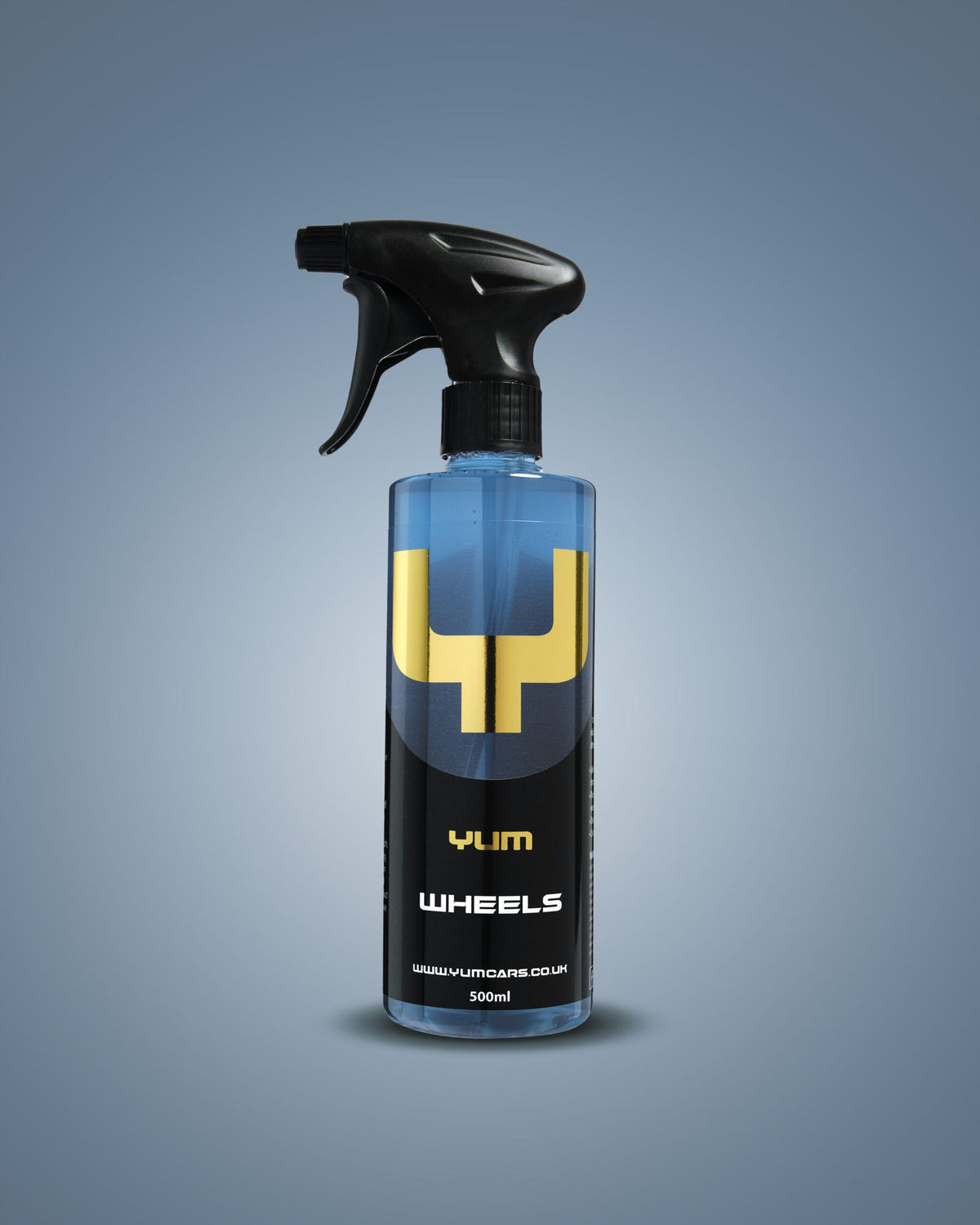
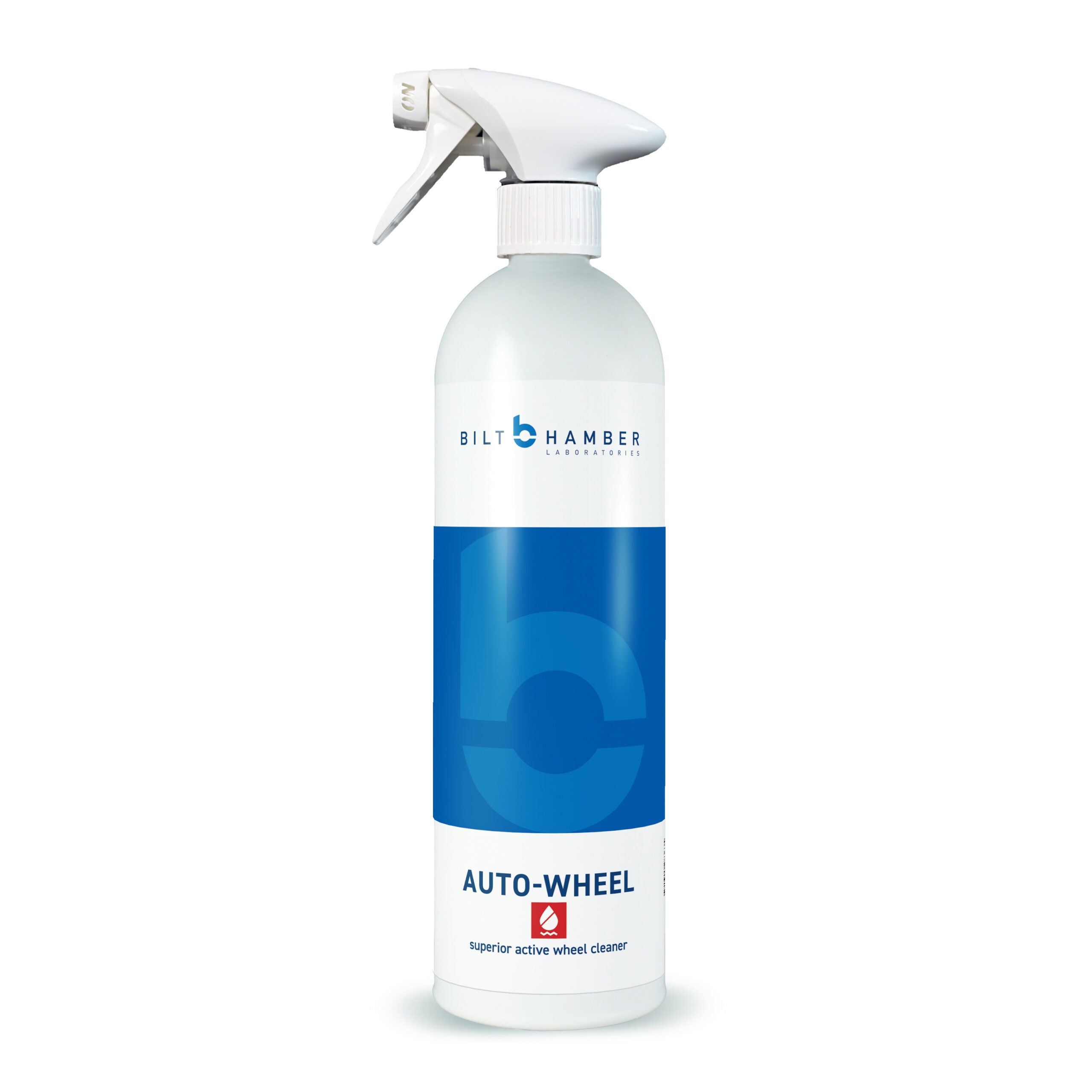


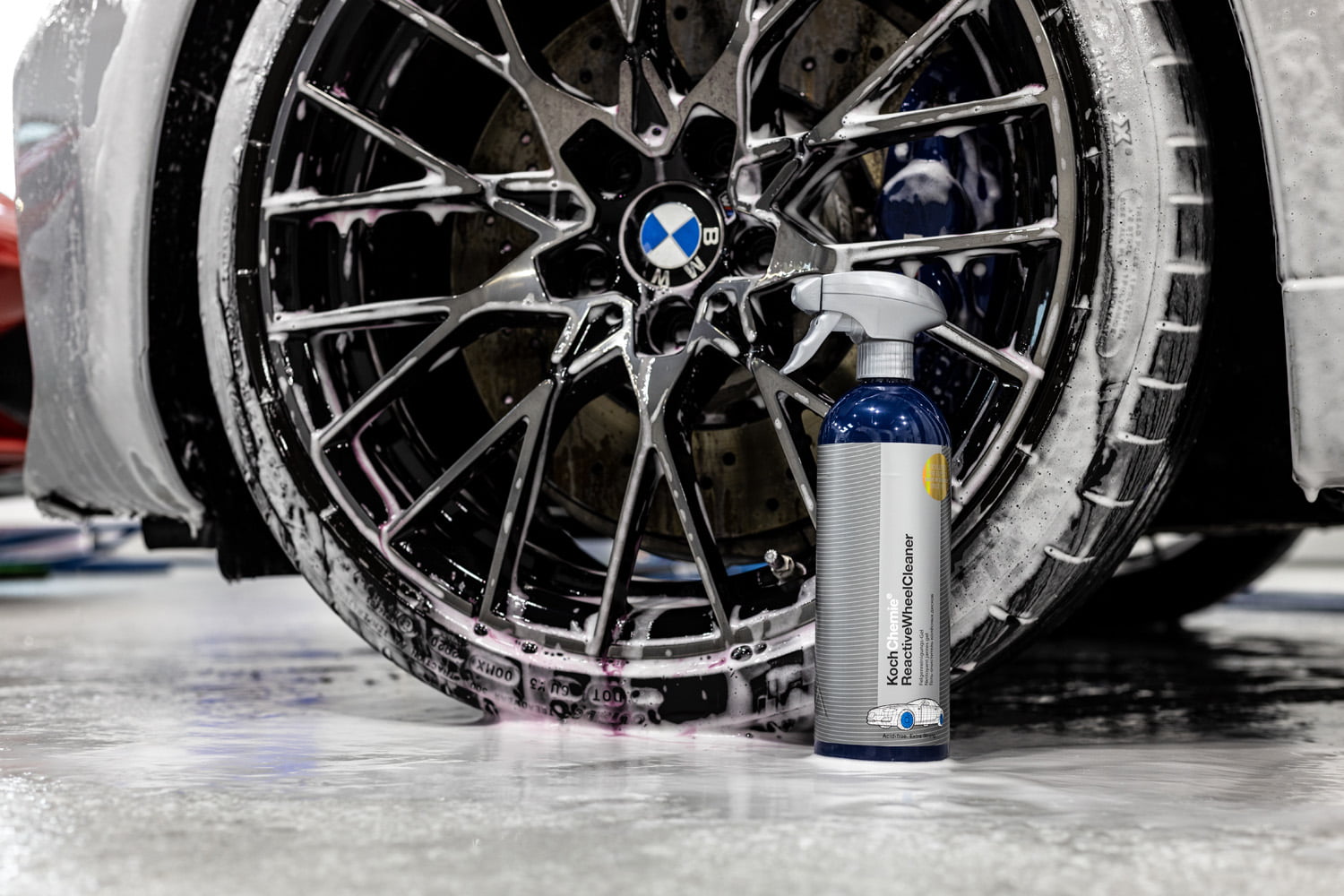



Wheels collect the worst contamination on the car: hot brake dust with iron in it, and road grime. Getting them clean is mostly about routine, not the strongest bottle on the shelf. This is how Paolo cleans wheels in our Melbourne studio, the products he reaches for, and the chemistry we choose not to sell.
Sixty seconds. The detail is underneath.
Routine beats strength. Regular maintenance washes do most of the work. Paolo keeps iron removers and acid cleaners for the occasional deep clean.
Treat the wheel like paint. Pre-wash, rinse the loose grit away, then contact wash. Grit you rinse off first is grit you never drag across the finish.
Yum is our everyday system. Wheel Foam and soft brushes every wash, Yum Wheels when brake dust builds up, Undress and Dress V2 for the tyres.
Cool wheels, one at a time. Never straight after a drive, and never let any product dry on the finish.
After an iron remover, look after the discs. Bare cast-iron discs flash-rust. Paolo mists them with Bilt Hamber Atom-Mac at 5%, Bilt Hamber's own figure for cars with disc brakes.
It's the type of acid that matters, not acid itself. We sell acid wheel cleaners, but we don't stock hydrofluoric-acid, bifluoride or hydrochloric-acid ones.


Paolo's maintenance wash, step by step
This is the wash Paolo does most often, on customer cars and on his own. It follows the same logic as washing paint: get the loose contamination off before anything touches the surface, then clean by hand with something soft.
Start cool, one wheel at a time. Never clean straight after a drive. A hot wheel can dry product onto the finish before you rinse it, and Yum's directions are blunt about it: the wheel must be cool to the touch, and product must never dry on it.
Pre-wash the dry wheel. Paolo's take, borrowed from washing paint: a pre-wash before any water, using a cleaner its maker says can go on dry. MIRCH, for one, say mist Grime Reaper generously onto a cool, dry wheel and leave it 1–3 minutes, never long enough to dry.
Rinse. A thorough pressure-washer rinse takes most of the loose grit and brake dust away before a brush goes anywhere near the finish.
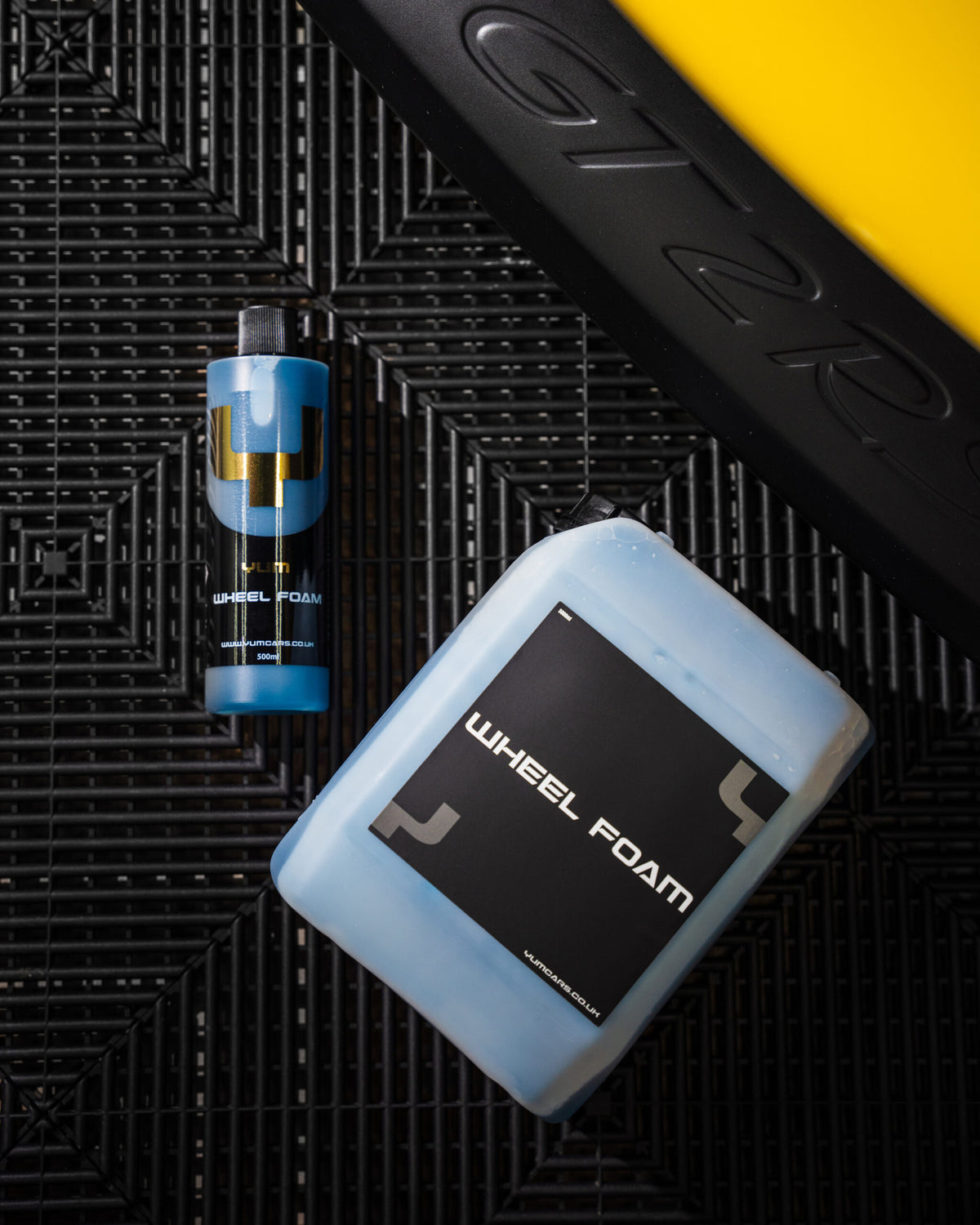
Contact wash. Foam the wheel with Yum Wheel Foam, work the barrel and spokes with the Wheel Woolies and the face with the merino Wheel Mitt. Get into the wheel nuts and the lip, where dust packs in. Rinse.
Then the tyres. Yum Undress goes on neat and gets scrubbed with a stiff tyre brush until the foam comes off clean, then rinsed. Once the tyre is dry, Yum Dress V2 goes on last.
Yum's directions start with a rinse, and so do the Yum steps here. Paolo just adds the dry pre-wash in front, the same idea as a paint pre-wash. Whatever you use, follow its label and never let it dry on the finish.
Why Yum is Paolo's favourite wheel system
Of everything on this page, Yum is the system Paolo reaches for most, because the steps fit together. Build it piece by piece, or get the lot in the Yum Wheel Bundle for 10% less than buying each piece separately.
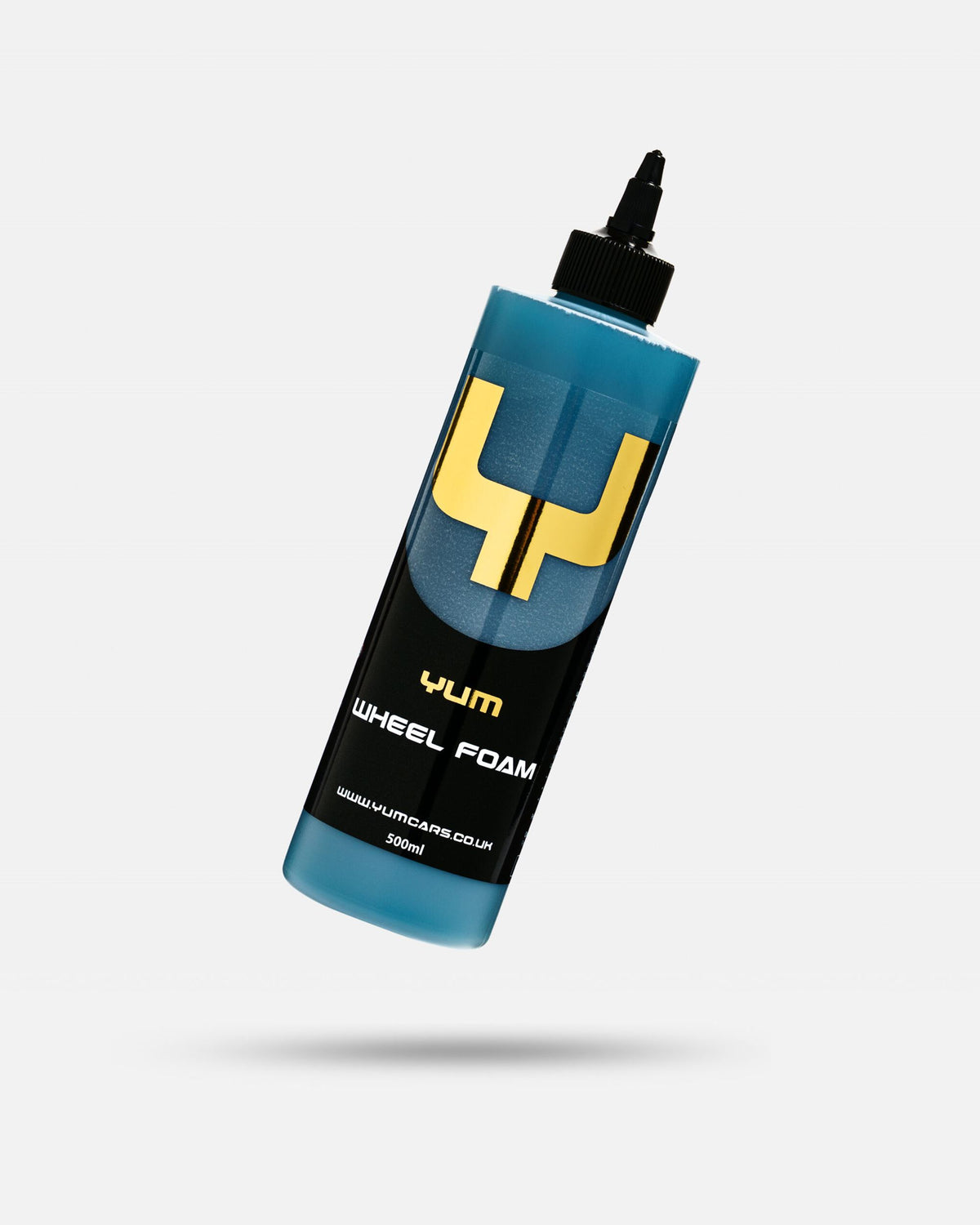
Yum Wheel Foam, the every-wash cleaner. An alkaline foam made for a pressure-washer foam cannon: 200 ml topped up with 800 ml of water. It clings to the face, barrel and arch long enough for the surfactants to work before you agitate.
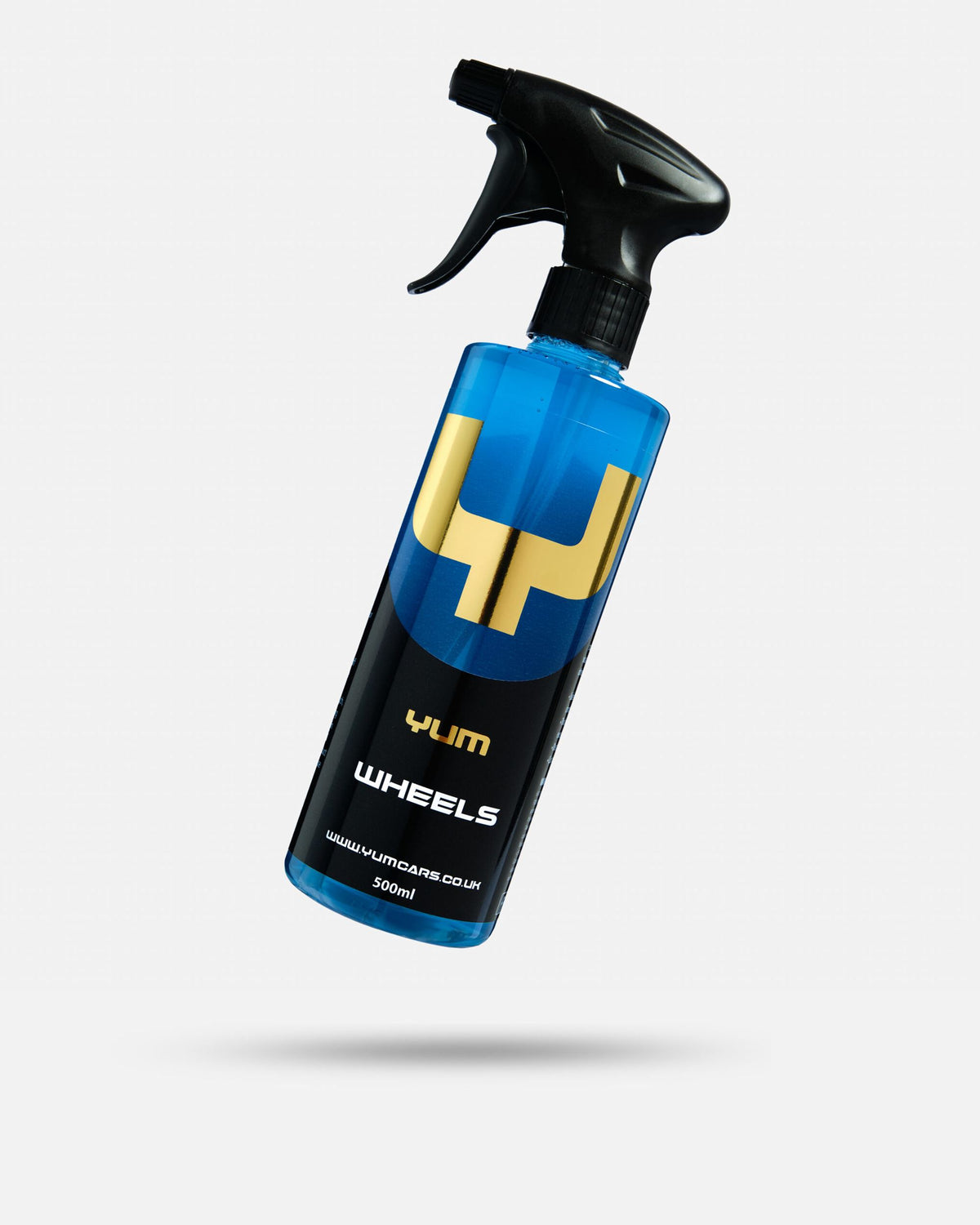
Yum Wheels, for when brake dust builds up. A non-acidic, pH-neutral wheel cleaner and iron remover in one bottle, used neat. Yum say the colour change shows in under a minute as it reacts with iron.
Yum Undress and Yum Dress V2, for the tyres. Undress, used neat, cleans the sidewall so Dress V2 lays down and bonds properly, which is why Yum recommend it every wash.
The Woolies and the Wheel Mitt, for the contact wash. Three Wheel Woolies brushes, small, medium and large on 18-inch handles, reach the barrels and between the spokes. The merino lambswool mitt does the face.


Which wheel cleaner for which job
We stock sixteen wheel cleaners. They sort into four jobs, and most cars only ever need the first two.
Every wash
Alkaline cleaners for road film and fresh brake dust.
Yum Wheel Foam · MIRCH Grime Reaper · P&S Brake Buster · Soft99 Kamitoré · Maniac Line Wheel & Tyre (see MA-FRA's wheel warning)
Built-up brake dust
Colour-changing iron removers, every so often.
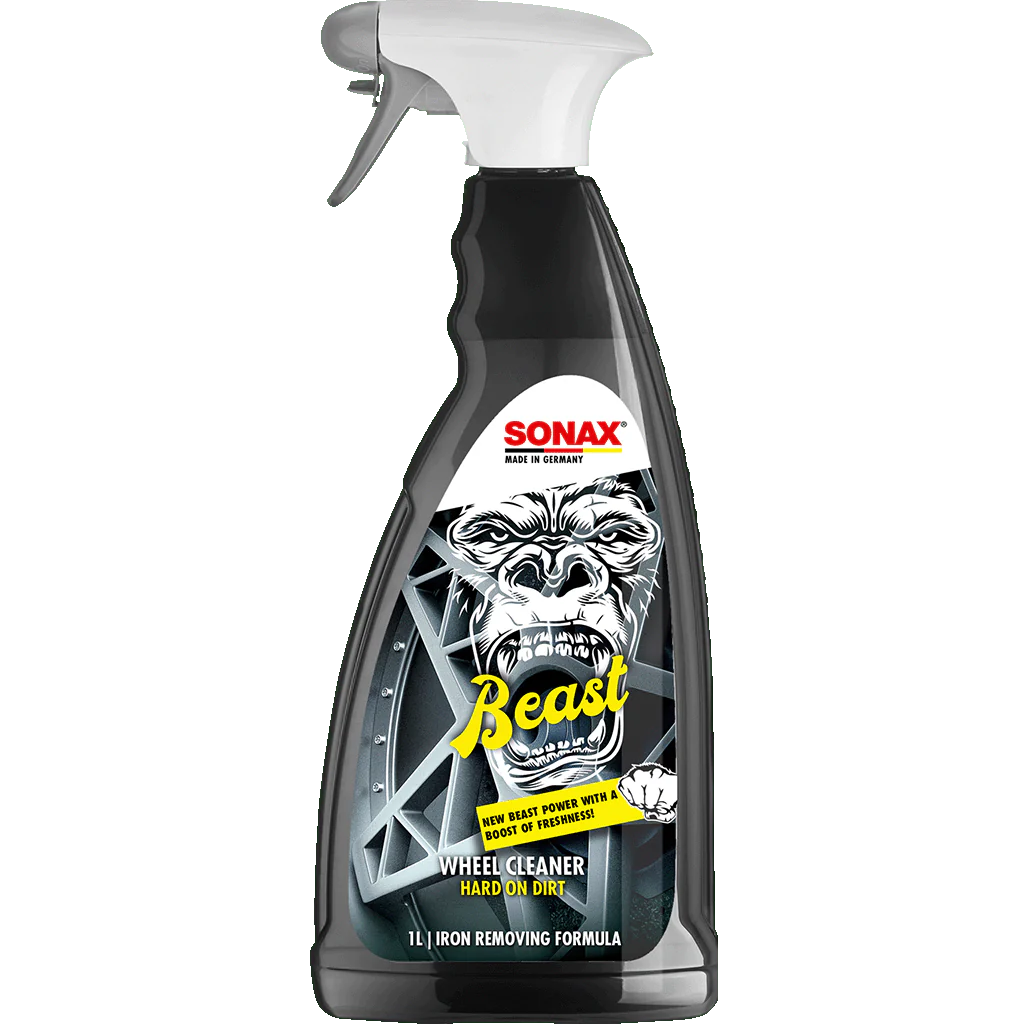
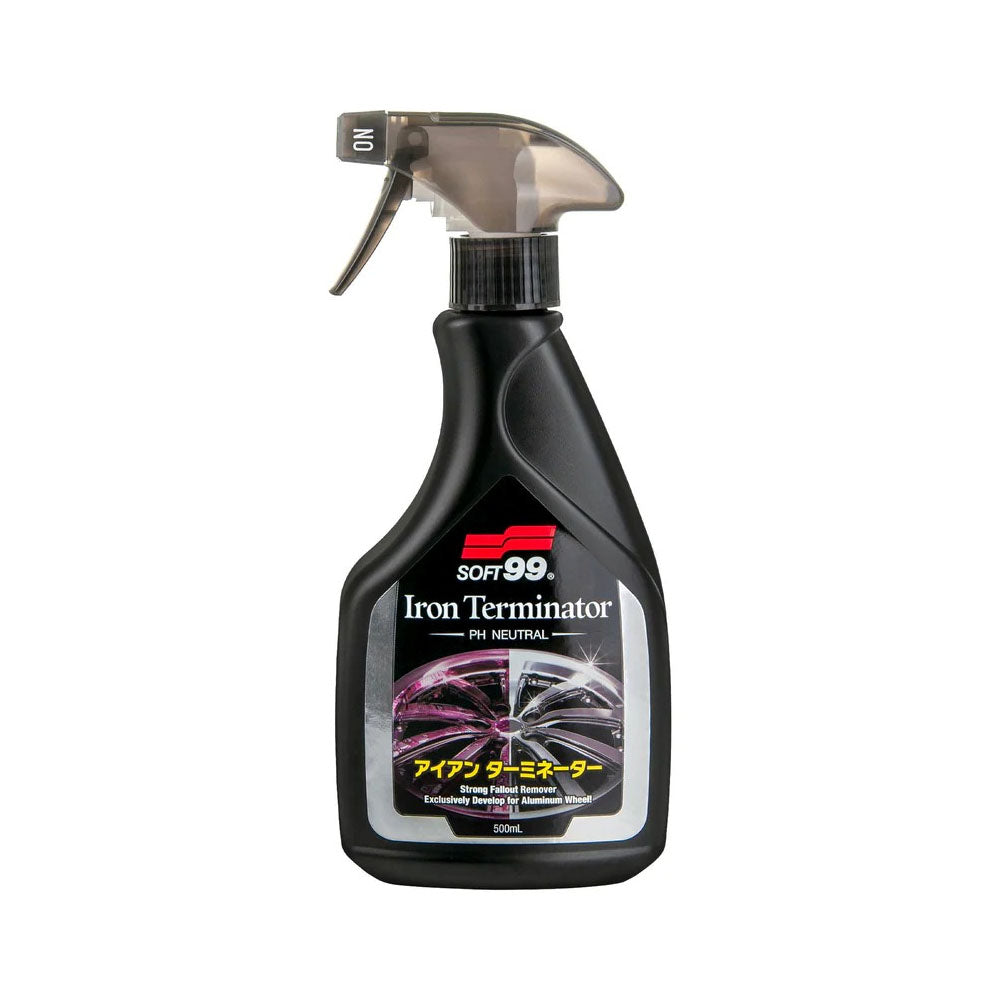
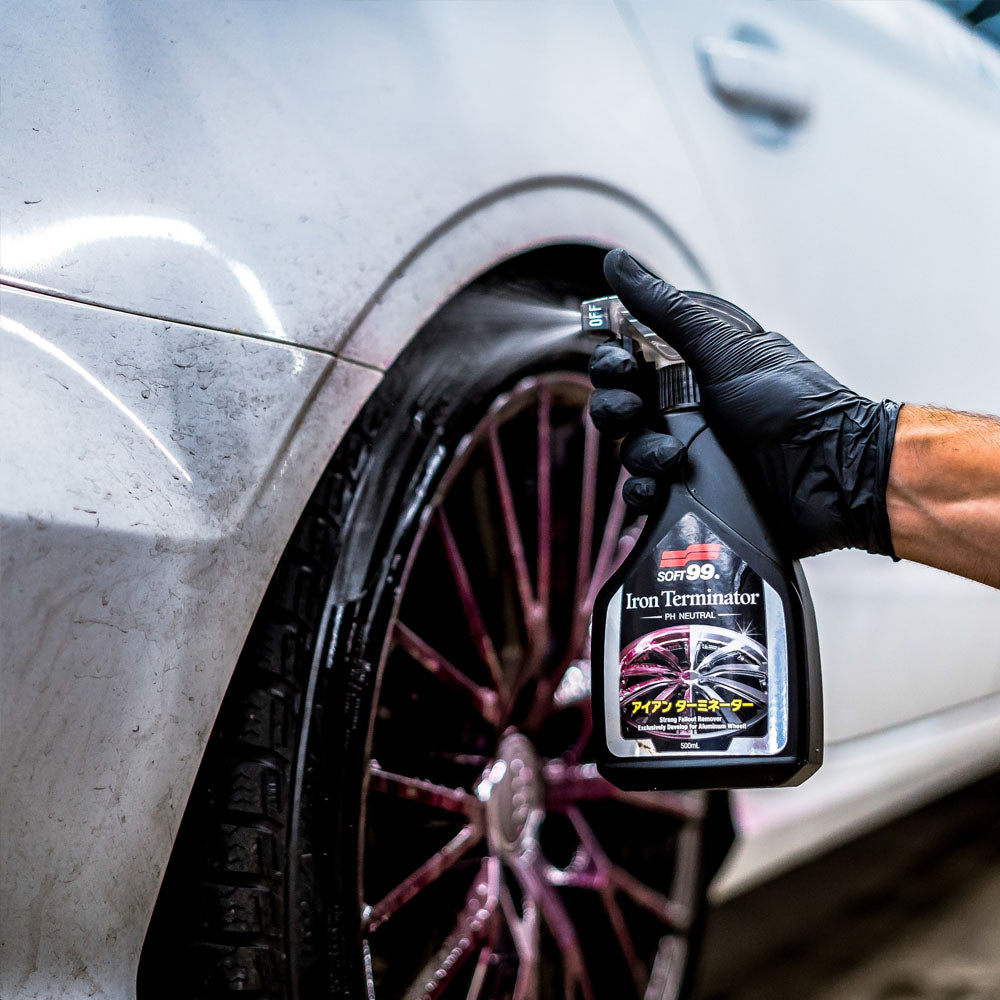
Yum Wheels · Koch Chemie MWC · Koch Chemie WheelKing · Koch Chemie ReactiveWheelCleaner · MIRCH Dragon Blood · SONAX Beast · Soft99 Iron Terminator · Bilt Hamber Auto-Wheel
Coated wheels
The coating does the heavy lifting, so go gentle: a cleaner its maker clears for coated wheels, soft brushes, and iron removers kept occasional. Feynlab, SONAX and Koch say Tire & Wheel, Beast and WheelKing are safe on ceramic-coated wheels; Soft99 say Kamitoré isn't for coated wheels.
Acid cleaners
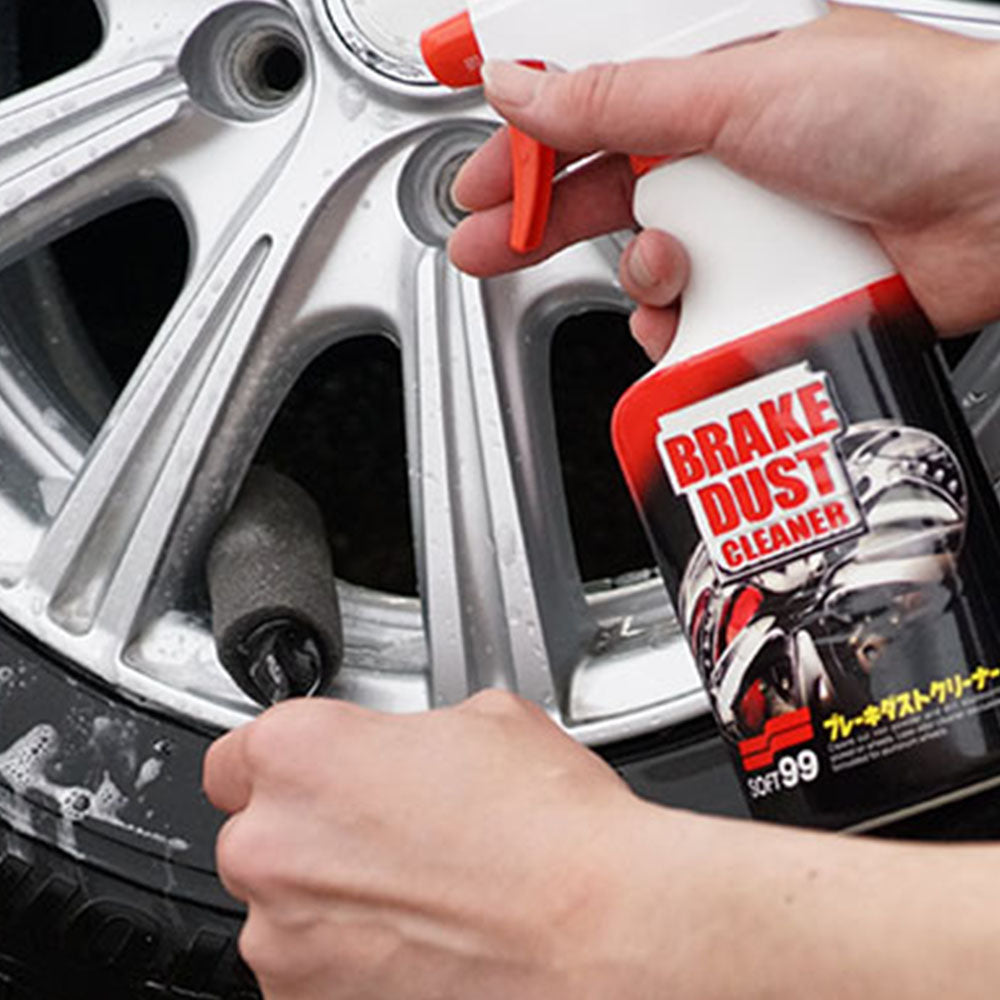
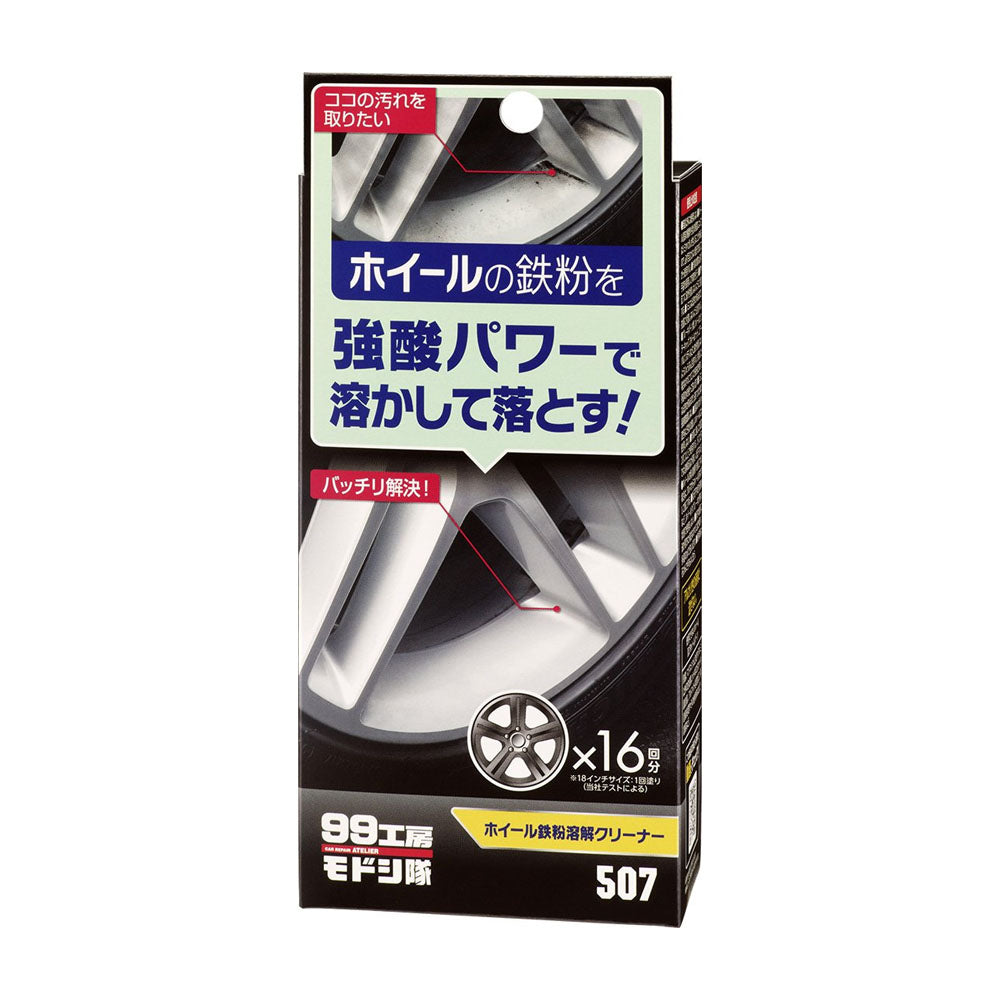
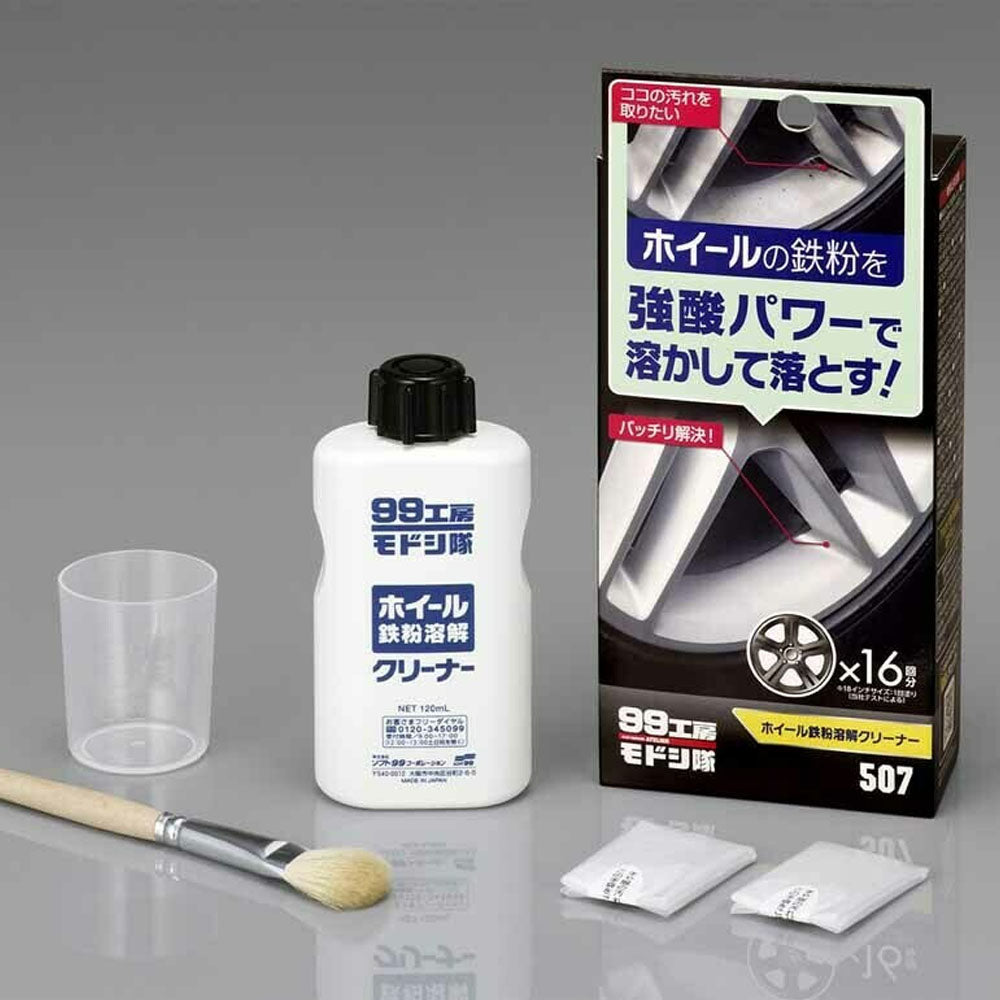
The acid isn't the issue; the type is. Soft99 New Brake Dust Cleaner is citric-acid based, and flammable. Soft99 Strong Acid Dissolver is 20% phosphoric acid, which Soft99 call a strong acid cleaner, for burned-on iron and brake dust that ordinary cleaners can't shift; Soft99 say not to use it on wheels in poor condition. Use both exactly as Soft99 direct.
Everything in the "The maker says" column is the manufacturer's own, from their product pages and data sheets. Where a maker doesn't state a pH, we don't guess one.
Every so oftenThe occasional deep clean
Paolo doesn't use iron removers or acids every wash. They're for when the maintenance wash stops being enough: brake dust that has baked on, or a wheel that still feels rough after a normal clean.
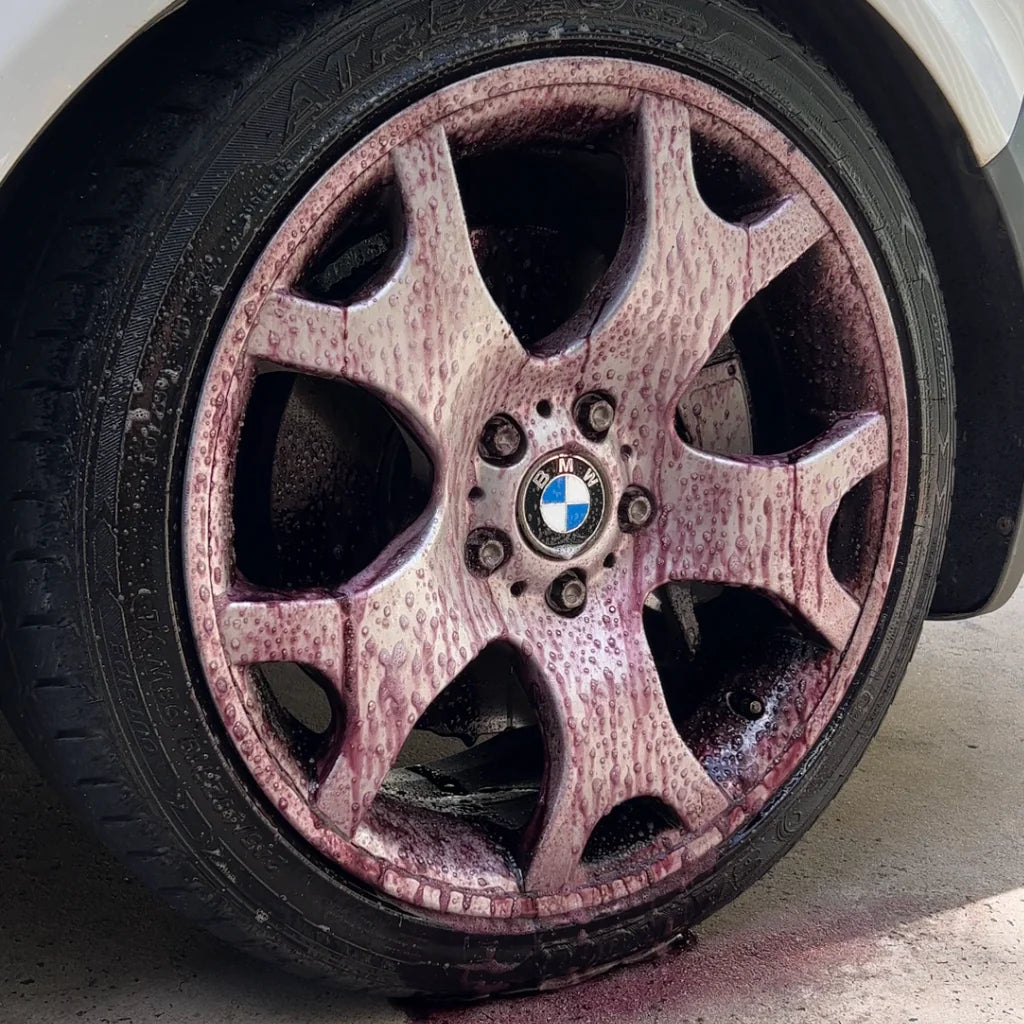
Colour-changing iron removers don't work by acid. Almost all of them are built on a thioglycolate, which reduces the iron in brake dust and binds it into a water-soluble complex that rinses away; that complex is the colour you see. Our iron remover comparison goes through the chemistry in full.

Acid isn't the issue; the type of acid is. Labocosmetica's Purìfica is an acid shampoo that runs below pH 3 at its working dilution, and it holds VDA certification, which Labocosmetica say attests "compatibility and safety on the most delicate materials"; they say it is safe to use even undiluted. Our acid wheel cleaners use citric acid (New Brake Dust Cleaner) and phosphoric acid (Strong Acid Dissolver), not the hydrofluoric or hydrochloric acid of cheap wheel cleaners. Soft99 call Strong Acid Dissolver a strong acid cleaner, for burned-on iron powder and brake dust that conventional wheel cleaners can't remove, and its safety data sheet classes it corrosive to skin and eyes: gloves, eye protection, a cool wheel, Soft99's directions to the letter, and never on wheels in poor condition. New Brake Dust Cleaner is flammable, so keep it away from heat, and Soft99 ask you to wear protective gloves.
Brake discsThe orange bloom on your discs, and the 5% fix
Cast-iron brake discs are bare metal. Wash them, and especially put an iron remover on them, and they flash-rust: a film of orange that the first few stops scrub off, usually straight onto the wheel you have just cleaned.
Paolo's answer is Bilt Hamber Atom-Mac, a corrosion inhibitor, misted onto the discs whenever an iron remover or acid has been on the wheel. Bilt Hamber's directions for cars with disc brakes: dilute to 5% in deionised or distilled water, atomise it onto the discs after washing, and let it dry.
50 ml of Atom-Mac, made up to 1 litre with deionised or distilled water. Label the bottle. Bilt Hamber's datasheet recommends a respirator with an A2 filter when you mist it.
If your wheels are bare, polished, anodised, chrome or magnesium, or you're not sure, read the label first: several makers rule those finishes out. Then test on a small hidden area.
It's the type of acid that matters. Hydrofluoric acid, and ammonium bifluoride, which becomes hydrofluoric acid in water, still turn up in cheap wheel cleaners. They work, and they etch alloy and clear coat while they do. Hydrofluoric acid is also a genuine medical hazard: it penetrates skin and attacks calcium, often with little pain at first. We don't stock hydrofluoric-acid, bifluoride or hydrochloric-acid wheel cleaners. The acids ranked, and why.
Watch Paolo clean wheels
Real cars and real wheels, start to finish, on our Instagram. Questions about your own wheels? Ask us.
Follow @alphadetailsmelbourne for more.
Your wheel cleaner is etching your wheels: why pH and the active ingredient matter more than the label.
How to choose the right wheel cleaner: brake dust, tyre browning and iron fallout, explained by a chemist.
Wheel cleaner and iron remover chemistry: the acids ranked, and the one we'll never sell.
The best iron remover in Australia? Nine compared on published numbers.
What is the best wheel cleaner?
For a maintained wheel, a non-acid cleaner every wash and a colour-changing iron remover every so often. Our everyday pick is the Yum system: Yum Wheel Foam each wash, and Yum Wheels when brake dust builds up.
Should wheel cleaner go on a wet or dry wheel?
Follow the label, because it differs by product. Yum's directions for Yum Wheels and Wheel Foam start with a rinse; MIRCH say mist Grime Reaper onto a cool, dry wheel. Paolo's routine uses both: a dry pre-wash, a rinse, then the Yum steps. Whichever you use, never let it dry on the finish.
How often should I use an iron remover on my wheels?
Every so often, not every wash: when brake dust has baked on, or the wheel still feels rough after a normal clean. Regular maintenance washes keep the build-up down, so you need it less.
Can I use wheel cleaner on ceramic-coated wheels?
Yes, if its maker says so. Feynlab, SONAX and Koch say Tire & Wheel Cleaner, Beast and WheelKing are safe on ceramic-coated wheels, while Soft99 say Kamitoré is not for coated wheels. Use soft brushes and keep iron removers occasional; the coating does most of the work.
Why do my brake discs go orange after washing?
Cast-iron discs are bare metal and flash-rust once they are wet, especially after an iron remover. Whenever Paolo has used an iron remover or acid, he mists the discs with Bilt Hamber Atom-Mac at 5% in deionised or distilled water, Bilt Hamber's figure for cars with disc brakes, and lets it dry.
Do you sell acid wheel cleaners?
Yes. The acid isn't the issue; the type of acid is. Labocosmetica Purìfica is an acid shampoo below pH 3, and Labocosmetica say its VDA certification attests compatibility and safety on the most delicate materials. Our acid wheel cleaners are Soft99 New Brake Dust Cleaner (citric acid) and Soft99 Strong Acid Dissolver (20% phosphoric acid). We don't stock hydrofluoric-acid, bifluoride or hydrochloric-acid wheel cleaners.