THE SHORT VERSION
There is no single best snow foam, and any list that gives you one is guessing. The six foams on our shelf run from below pH 3 to pH 13.1 — because the pH scale is logarithmic, that is a difference in hydrogen ion concentration of more than ten billion times. Each one is built for a different soil. Choosing the best snow foam means choosing the right one for the job in front of you.
Best snow foam for a weekly wash on a coated, waxed or sealed car — neutral. Labocosmetica NÈVE (pH 7 at 20°C) or Koch Chemie Gentle Snow Foam (pH 7.5). Surfactant-led cleaning that lifts road dust without taxing your protection.
Best snow foam for a genuinely dirty car, or the opening step of a decontamination wash — non-caustic alkaline. Labocosmetica PRÌMUS 2.0 (pH >11 at 20°C, free of caustic salts, VDA certified) or Bilt Hamber Auto-Foam (safety data sheet gives pH approx. 13, with no caustic alkali among its declared ingredients — which is exactly the point of this article).
Best snow foam for water spotting, mineral film and iron fallout — acid. Labocosmetica PURÌFICA, pH below 3 at its 1:100 to 1:200 working dilution, and VDA certified.
Best snow foam for fleet and heavy commercial work — high-alkaline TFR. Koch Chemie Vorreiniger B, pH 13.1 per Koch's data sheet, used at 1:30 to 1:50. We recommend professional use only, and it must never be allowed to dry on the panel.
The part nobody tells you. pH does not measure cleaning power — it tells you which soils a foam is aimed at. A neutral foam with a serious surfactant package will out-clean a harsh one with a lazy package, and what actually damages a car is caustic soda, not a high number on a label. Every figure on this page is quoted from the manufacturer's own technical or safety data sheet, not from marketing copy.
Line up every snow foam on our shelf and check the manufacturers' own data sheets, and you get a number line that should stop you mid-scroll: from below pH 3 to pH 13.1 (published figures — the basis differs by product, see the table). Because the pH scale is logarithmic, that gap represents a difference in hydrogen ion concentration of more than ten billion times — between two bottles that both call themselves "snow foam" and both come out of the same style of foam cannon. This article puts the published numbers side by side, explains what they actually tell you, and — more importantly — what they don't.

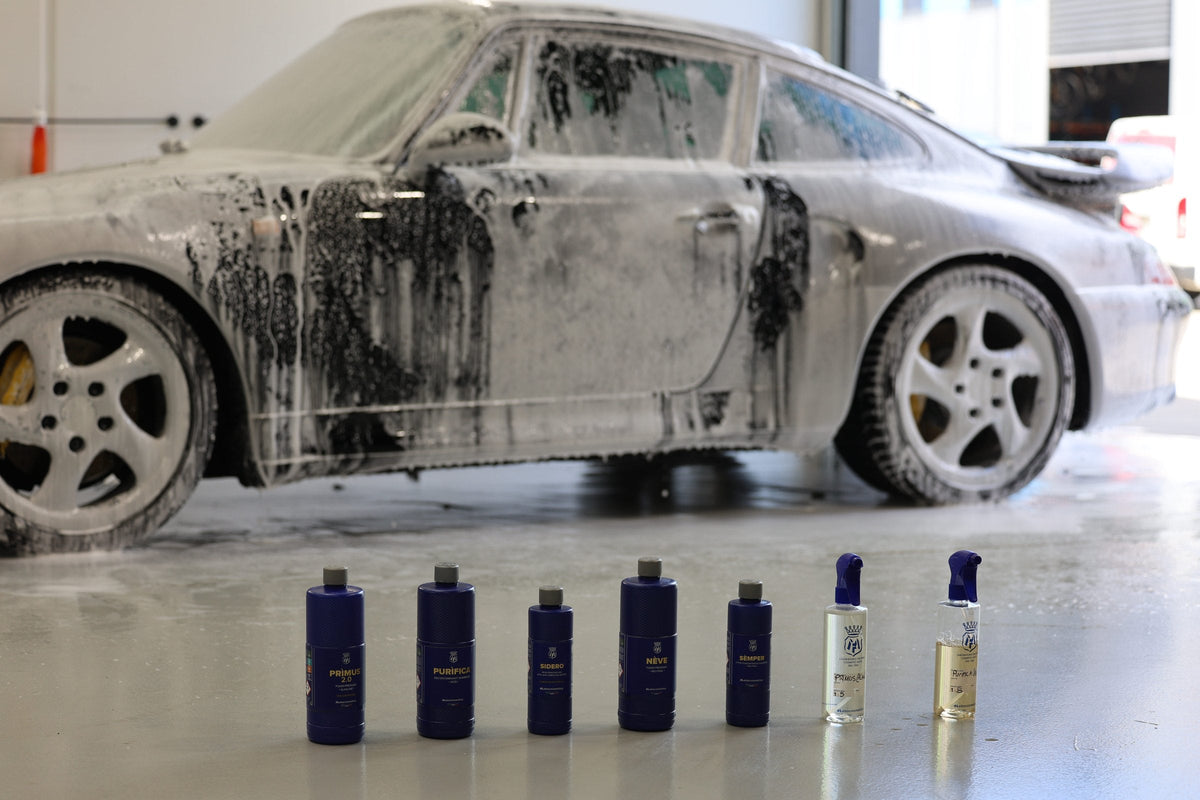
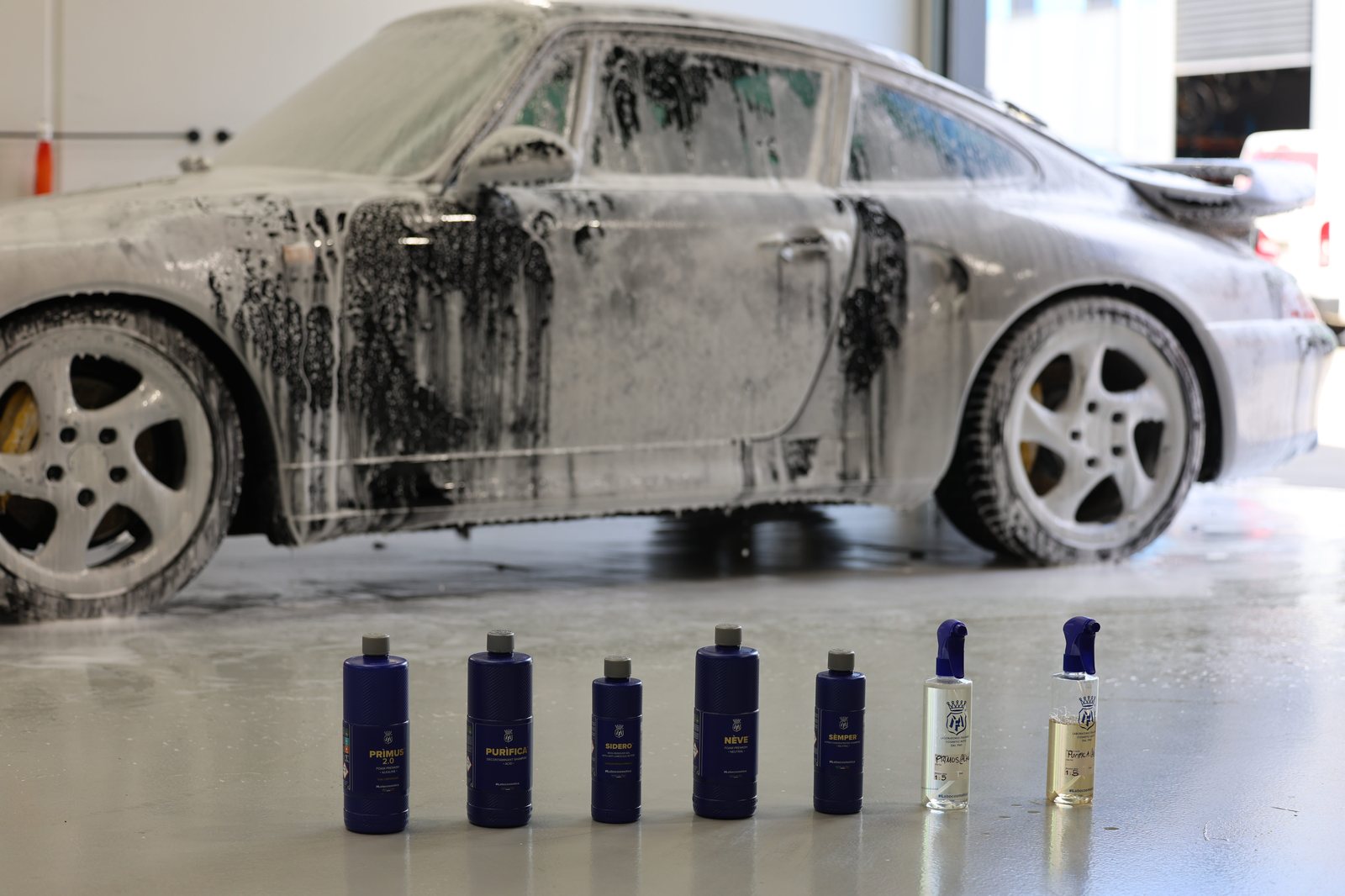
The dirty foam is the chemistry working — organic soiling lifting off the panels mid pre-wash at the studio, with the Labocosmetica lineup (and our own labelled 1:5 dilution bottles) waiting their turn.
THE ALPHA SHELF · ONE pH SCALE
← ACIDNEUTRALALKALINE →
Manufacturer-published values. Bilt Hamber Auto-Foam is not marked separately because it lands on top of Vorreiniger B — its safety data sheet gives pH approx. 13, yet it is non-caustic (more on that below).
Snow foam comparison: six foams at a glance
Every foam in this table is one we stock, use in the studio and ship across Australia from our Melbourne workshop. The pH column quotes the manufacturer, and notes where the sheet doesn't say whether the figure describes the neat product or a working dilution — a distinction most comparisons skip, and the single biggest source of confusion about snow foam pH.
| Snow foam | Published pH | Type | Best for | Certification |
|---|---|---|---|---|
| Labocosmetica PURÌFICA | <3 at 1:100–1:200 (working dilution) | Acid | Water spotting, mineral film, inorganic fallout | VDA |
| Labocosmetica NÈVE | 7 at 20°C (TDS rev 2; basis not stated) | Neutral | Weekly maintenance on protected paint | — |
| Koch Chemie Gentle Snow Foam | 7.5 (Koch data sheet; dilution not stated) | Neutral | Maintenance foam for coated or freshly protected cars | — |
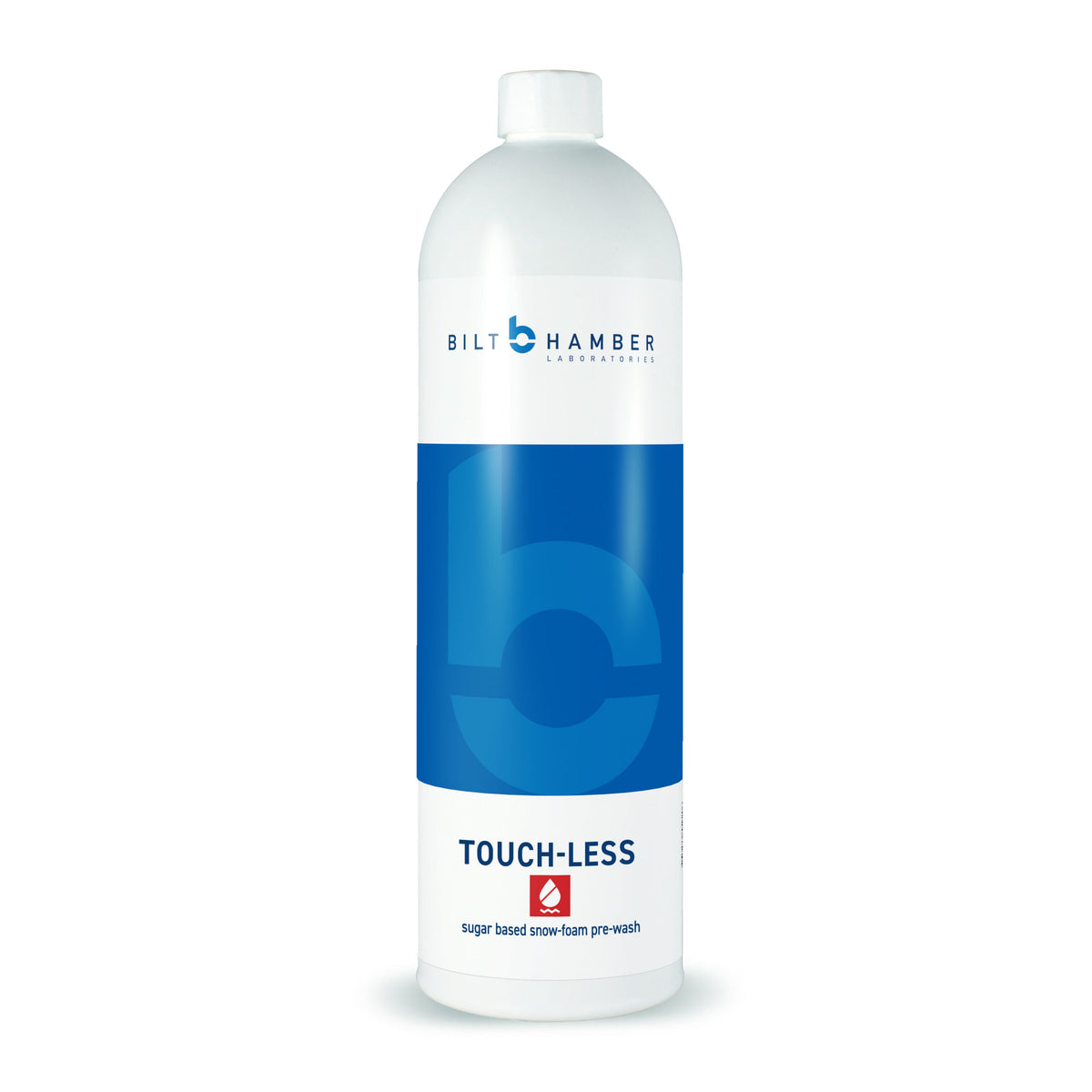
| Bilt Hamber Auto-Foam | Approx. 13 (SDS rev 17/03/2023; basis not stated), per safety data sheet only — not quoted in marketing. Dosed by panel impact ratio, 1:100 to 5:100 | Alkaline, non-caustic | Touch-less pre-wash on dirty cars | — |
| Labocosmetica PRÌMUS 2.0 | >11 at 20°C (TDS rev 3; basis not stated) | Alkaline, free of caustic salts | Heavy organic soiling; step one of a decon wash | VDA — first pre-wash in the detailing sector (per Labocosmetica) |
| Koch Chemie Vorreiniger B | 13.1 (TDS; SDS says 13; basis not stated), used at 1:30–1:50 | High-alkaline TFR | Fleet and commercial work | VDA Class A/B tested |
Sources, checked 12 Oct 2026: Koch Chemie GSF TDS and SDS (rev 20.01.2026); Vorreiniger B TDS and SDS (rev 08.09.2026); Labocosmetica NÈVE TDS (rev 2, 26/06/2023), PRÌMUS TDS (rev 3, 26/06/2023) and PURÌFICA TDS (rev 3, 26/06/2023); Bilt Hamber Auto-Foam SDS (rev 17/03/2023; German-language copy hosted by a retailer, as we couldn't find one on Bilt Hamber's own site).
What pH is snow foam?
There is no such thing as "snow foam pH" — the category spans almost the entire scale. Here's what the manufacturers themselves publish for the six pre-wash foams above, in detail.
Labocosmetica NÈVE pH 7 · NEUTRAL
The official data sheet lists pH 7 at 20°C. A phosphate-free neutral foam built on highly biodegradable surfactants, with chelating agents that keep it working in hard water — Melbourne's supply is famously soft, but if you're washing on tank or bore water, or anywhere interstate, that chemistry earns its keep. Labocosmetica describes it as a neutral foam with cleaning power comparable to an alkaline one, and it's safe over wax, sealants and ceramic coatings. The data sheet's dilutions run from 1:20 for everyday dirt down to 1:5–1:10 for stubborn soiling. See NÈVE here.
Koch Chemie GSF Gentle Snow Foam pH 7.5 · NEUTRAL
Koch Chemie describes GSF as pH neutral, and its technical data sheet gives the figure: pH 7.5 (the sheet doesn't say whether that is the neat product or a working dilution). Their stated claim is that "due to its pH neutral formula, it does not corrode waxed or sealed surfaces". The cleaning is done by an anionic and amphoteric surfactant package (alkyl sulfates, alkane sulfonates and a coco-derived betaine, per the SDS ingredient listing), not by pH. Koch's own dosing is 20 ml per litre through a foam sprayer, or 50 ml into 10 litres for a hand wash. This is the maintenance foam for a coated or freshly protected car. See Gentle Snow Foam here.
Labocosmetica PRÌMUS 2.0 pH >11 · ALKALINE
The alkaline pre-wash we use in the studio's own decon washes. The official data sheet gives pH >11 at 20°C — but the number that matters here is not the 11, it's what produces it. Primus contains no free caustic salts: the alkalinity comes from a safer surfactant-based system rather than sodium hydroxide. It was the first pre-wash in the detailing sector to earn VDA certification (Labocosmetica's own wording), the German automotive industry's independent material-compatibility test against paint, alloys, trim, rubber and PPF. Data-sheet dilutions run 1:3 to 1:10 on wheels and tyres, 1:20 on lower sides and bumpers, and 1:5 to 1:10 through a foam gun depending on the season. See PRÌMUS 2.0 here.
Bilt Hamber Auto-Foam pH ≈ 13 · ALKALINE, NON-CAUSTIC
This one is the most interesting entry on the list, and we'll come back to it below. Bilt Hamber don't lead with a pH figure anywhere in their marketing — but their safety data sheet does give one, and it is approximately 13, effectively level with the professional TFR above it. What that same document does not declare is any caustic alkali: the listed ingredients are ethoxylated C9/11 alcohols, dipropylene glycol methyl ether and quaternary ammonium compounds. A pH of 13 with no caustic soda behind it is the cleanest demonstration on this page of why the number alone is the wrong thing to judge a pre-wash on. Their dosing instruction says the same thing in different words: "dilute as required to obtain a PIR (panel impact ratio) of between 1:100 and 5:100", with the claim that it won't dull high-gloss finishes even with frequent concentrated use. See Auto-Foam here.
Koch Chemie Vorreiniger B pH 13.1 · HIGH ALKALINE
The professional TFR on the list, and the highest published number on our shelf. Koch's data sheet gives 13.1 (the safety data sheet says 13) without saying whether that is neat or diluted. It's a highly concentrated product used at 1:30 to 1:50 for pre-cleaning, so what reaches the panel is far milder. It's phosphate-free, carries corrosion inhibitors for sensitive metals like anodised aluminium, and is tested to VDA Class A/B standards — but we recommend it for professional use only (Koch's sheets don't restrict it), and the directions are firm: not on hot surfaces, and never let it dry. See Vorreiniger B here.
Labocosmetica PURÌFICA pH <3 AT WORKING DILUTION · ACID
The other end of the scale entirely. Labocosmetica quotes Purifica's pH by dilution band — below pH 3 at 1:100 to 1:200, below pH 4 from 1:200 to about 1:330, and around pH 5 at 1:400 — and the sheet also lists pH > 2 at 20°C for the product itself, without stating a dilution. It was the first acid shampoo in the car detailing sector (Labocosmetica's own wording), and it earns its place in a decon wash by dissolving what alkaline foams can't touch — mineral deposits, water spotting and inorganic films. The acidity comes from buffered noble acids, with no hydrofluoric acid and no ammonium bifluoride anywhere in the formula, and it's VDA certified. See PURÌFICA here.
Does a higher pH mean a stronger clean?
No — and this is the single most common misreading of a product label. The pH scale measures hydrogen ion concentration, and each full step is a tenfold change: pH 11 is not "a bit more alkaline" than pH 8, it is a thousand times more alkaline. But pH measures how acidic or alkaline a solution is — it does not measure how well it cleans. Cleaning is done by the surfactant package: molecules with a water-loving head and an oil-loving tail that lift soils off the surface and hold them in suspension until you rinse. A neutral foam carrying a serious surfactant system can out-clean a harsher product carrying a lazy one — which is exactly the design brief behind a foam like NÈVE, formulated to clean like an alkaline product from a neutral pH. The pH tells you which classes of soil a product is biased toward: alkaline chemistry saponifies and breaks down organic soiling like traffic film, oils and bugs, while acidic chemistry attacks inorganic contamination like mineral scale and fallout. It's a targeting choice, not a power rating.
Why doesn't Bilt Hamber lead with a pH number?
Bilt Hamber keep the pH off the bottle and out of the marketing — you have to open the safety data sheet to find approximately 13 — and their stated position is that Auto-Foam is alkaline but non-caustic, and that caustic content, not pH, is what damages coatings. Read the number cold and Auto-Foam looks as fierce as a professional truck wash. Read the ingredient list and it plainly isn't. They're right about the mechanism. The cheapest way to make a product strongly alkaline is sodium hydroxide — caustic soda — and it's the specific chemical, not the number, that does the damage. On alloy wheels and trim fasteners, sodium hydroxide attacks aluminium directly: 2Al + 2NaOH + 2H₂O → 2NaAlO₂ + 3H₂↑ — the metal is converted to soluble sodium aluminate, releasing hydrogen gas, which in practice means pitting and permanent etching. It degrades rubber and plastic trim on the way through. Two pre-washes can both sit at pH 13, one built on caustic soda and one on non-caustic alkaline surfactant chemistry, and only one of them is eating your wheels. This is why the ingredient question always outranks the pH question — and why certifications like VDA, which test the finished formula against real automotive materials, tell you more than any single number on the label.
Bottle pH vs panel pH — what actually lands on your paint?
Almost every published pH figure is a bottle figure — the sheets rarely say what it was measured on — and almost nobody foams neat product. Vorreiniger B's 13.1 is the bottle figure; through a 1:30 to 1:50 dilution and then a foam cannon's own further dilution, the mix arriving at the panel is a very different solution. Dilution pulls the pH of a working mix toward the pH of your water supply, and how far it moves depends on how strongly the product is buffered — a well-buffered formula holds its working pH, a poorly buffered one collapses toward tap water. That's also why Labocosmetica quoting Purifica's figures by dilution band is the more honest style of data: it describes what you actually use. If you want the deeper theory, the full pH series covers it: why pH doesn't tell the full story, washing a ceramic coated car, and what actually cleans your car.
Which snow foam is best for your car?
Weekly maintenance on a protected car. Neutral. A coated, sealed or waxed car that gets washed regularly doesn't need aggressive chemistry — it needs a surfactant-led foam at pH 7 that lifts road dust without taxing the protection. NÈVE or Gentle Snow Foam, through a cannon like the MTM PF22.3 kit. If you are still choosing the hardware, we compared the three foam cannons we carry on published specs and real cost — including the flow-rate minimum that decides whether any of them will foam on your machine.
A properly dirty car, or the opening move of a decon wash. Alkaline and non-caustic. This is Primus territory — and our standing studio method is to apply it to a dry car. No pre-rinse: a film of rinse water both dilutes the foam below working concentration and physically sits between the surfactants and the organic soiling they're there to break down. Auto-Foam plays the same position, dosed by panel impact ratio rather than by pH.
Mineral film, water spotting, fallout — the soils alkaline foams ignore. Acid side. Purifica in the foam cannon (or the wash bucket when contamination is heavy) dissolves the inorganic layer, which is why an alkaline foam followed by an acid wash forms the backbone of the 3-pH wash system we teach in our classes.
Fleet, commercial and heavy TFR work. Vorreiniger B — with professional respect. Dilute to spec, keep it off hot panels, never let it dry, and it delivers the economics that make it a workshop staple across Europe.
Common questions about snow foam
Is snow foam worth it, or is it a gimmick? It is worth it, but not for the reason most people buy it. Snow foam is not a wash — it is a pre-wash, and its job is to lift and carry away the loose grit before anything touches the paint. Almost all wash marring is put into paint by dragging particles across it with a mitt. Removing those particles chemically first is the cheapest scratch prevention there is. Judged as a cleaner it underwhelms; judged as a way to reduce contact, it earns its place every time.
Is snow foam the same as car shampoo? No. Shampoo is formulated for contact washing with a mitt and to rinse cleanly without stripping protection. Snow foam is formulated to cling — the foam structure extends dwell time on vertical panels so the surfactants have minutes, not seconds, to work. Some products cross over, but a foam optimised for cling is rarely the best bucket shampoo and vice versa.
Is snow foam safe on a ceramic coating? The chemistry decides, not the pH number. A non-caustic alkaline foam formulated for automotive surfaces — Primus 2.0 and Auto-Foam are the reference examples — is coating-safe used as directed. Caustic soda products are the risk, at any pH. Independent material-compatibility certification like VDA is the strongest evidence a label can carry.
Is snow foam pH neutral? Some are and most aren't. Of the six here, two are neutral (NÈVE, Gentle Snow Foam), three are alkaline (Primus 2.0, Auto-Foam, Vorreiniger B) and one is acid (Purifica). "Snow foam" describes how a product is delivered, not what pH it is.
Can I mix snow foams to "balance" the pH? Don't. Mixing an acid and an alkaline product mostly neutralises both — you pay for two formulas and get the cleaning power of neither, plus unpredictable chemistry in the bottle. Use them in sequence instead, the way the 3-pH method does.
Does foam thickness mean cleaning power? No. Foam is a delivery mechanism — it extends dwell time on vertical panels. The cleaning happens where surfactants meet soil, and a thin wet foam with a strong package outworks a shaving-cream foam with a weak one. The same point applies to the hardware, which is why our foam cannon comparison judges cannons on cling and repeatable dilution rather than on how impressive the first photograph looks.
Where to buy these snow foams in Australia
All six are stocked at Alpha Details, a chemistry-led detailing studio and car care store in Heidelberg West, Melbourne, shipping Australia-wide. We hold the complete Labocosmetica and Koch Chemie ranges — the only store in Australia that carries both in full — alongside Bilt Hamber. Everything on this page is a product we use on customers' cars every week, which is why the pH figures came off the data sheets rather than the marketing copy.
The short version of all of it: read the ingredient story, not just the number. The number tells you where a product sits on the scale; the chemistry behind it tells you whether it belongs on your car. And once our meter results start landing on this page, you'll be able to see both — what the manufacturers publish, and what we measured.

Leave a comment
This site is protected by hCaptcha and the hCaptcha Privacy Policy and Terms of Service apply.