The 3-pH Decontamination Wash — Hands-On Class
A hands-on, small-group class at Alpha Details — the exact forensic-level wash we run before every paint correction, PPF install and coating. Built for enthusiasts and professional detailers who want a genuinely clean, damage-free surface — and want to understand why every step works.
Chemistry in plain terms. Led by Paolo Recinella (B.Sc Chemistry), we explain the science as we go — no jargon, just what's happening on the paint and why. You won't just copy a process; you'll understand the pH, the actives, and the safe way to use them.
How booking works — seats, not dates
Classes run on Saturdays in small groups so everyone gets hands-on time — which means a class only runs once 5 seats are filled. Here's how it works:
1. Buy your seat now — you're locked into the next class.
2. Tell us which Saturdays suit you best — add them in the order note at checkout, or reply to our confirmation text.
3. As soon as the class fills, we pick the Saturday that suits the most people and confirm it with everyone.
4. Can't make the chosen date? Your seat rolls to the following class — or we refund it in full.
On the day — the full wash, inside & out
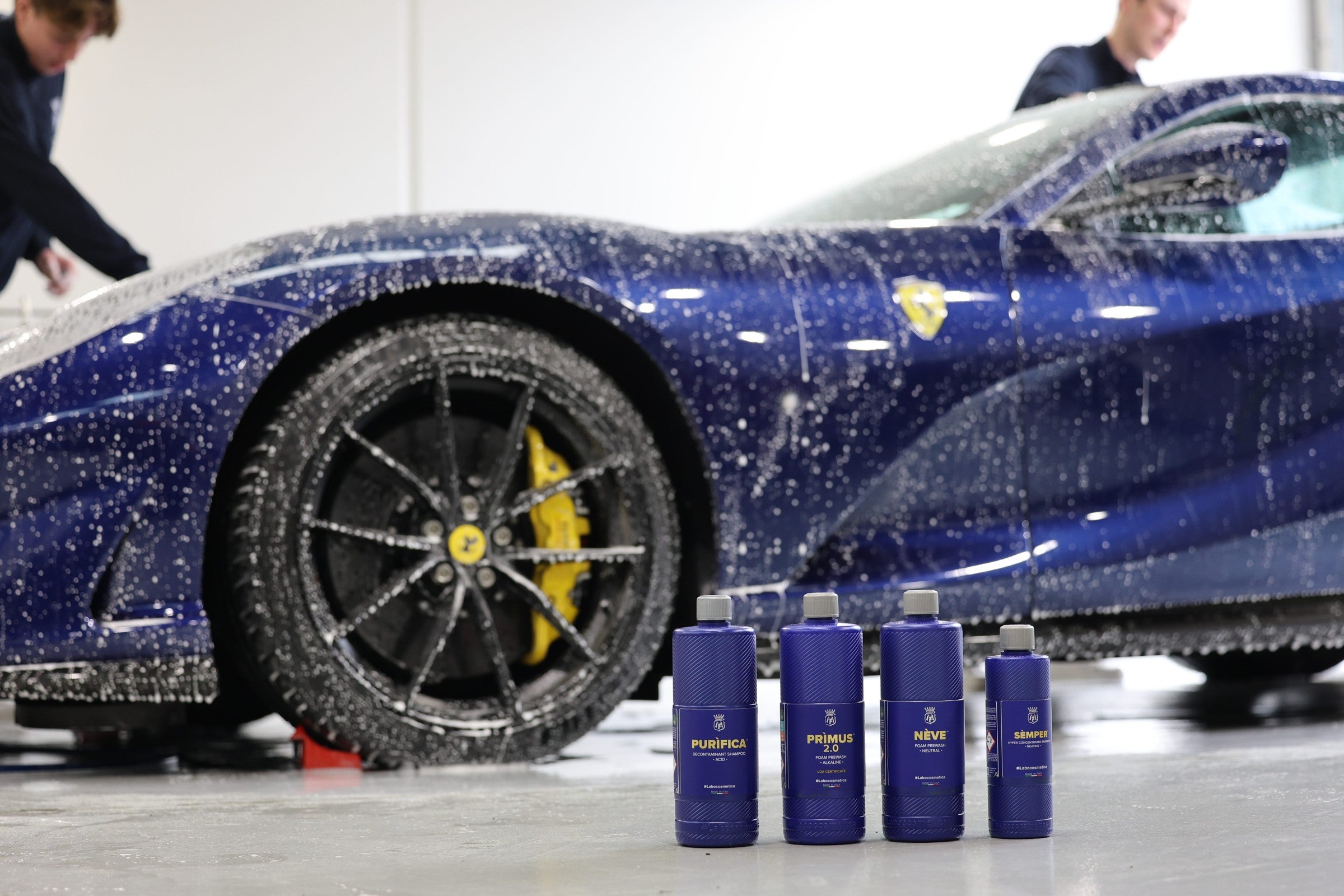
- The 3-pH system decoded: alkaline pre-wash → acid decontamination → de-ironing → pH-neutral contact wash, and why the paint only gets touched at the final stage
- Iron removal & fallout — what's happening on the paint, done safely
- Water spots — dissolving the mineral deposits chemically
- When to clay bar — and when you shouldn't
- Wheels, arches, door jambs & engine bay — the areas most people rush
- Glass and a full interior reset
- Prepping a surface for polishing, PPF, or your own sealant / wax / ceramic
- Safe procedure at every step — no damage, ever
Water spots vs. etching — know the difference
Water spots are a chemistry problem. When mineral-rich water — hard tap water or sprinkler overspray — dries on paint, it leaves calcium and magnesium carbonate behind. These sit on the surface, and a mild acidic remover dissolves them off (roughly CaCO₃ + 2H⁺ → Ca²⁺ + H₂O + CO₂). Done correctly, the paint underneath is untouched. Clean rainwater is far softer, which is why it spots far less.
Etching is a physical problem. If a deposit is left long enough, it can deform the clear coat itself, leaving a crater or ring in the paint. No acid or wash removes that — etching is corrected mechanically, at the polishing stage. In the class we'll show you how to tell them apart on the panel, remove the spots safely, and flag any true etching for correction.
The chemistry, explained
Why VDA-certified chemistry matters, the difference between safe and cheap actives (no HF, no caustic soda), and how to read a label so you choose the right product every time.
Details
When: Saturdays — the next class is locked in as soon as 5 seats fill (typically every 4–6 weeks). You tell us which Saturdays suit; the group's preference picks the date.
Time: 10:00am – 2:00pm
Where: West Heidelberg, Melbourne (full address on confirmation)
For: Enthusiasts & detailers, all levels
Spots: Strictly capped — hands-on for everyone
Includes: Live demo on a car, hands-on time, take-home brochure, Q&A, refreshments
What to bring
Yourself and your questions. All products and panels supplied.
Refunds
Full refund any time before your class date is confirmed, and up to 7 days before the confirmed date. Within 7 days, the spot is transferable to a mate — or rolls to the next class.