SONAX Clay Bar 100g | Paintwork Decontamination Clay | Made in Japan
In stock
Free shipping on AU orders over A$95 · subject to weight & address · no PO Boxes or Parcel Lockers — street address only
You're A$95.00 away from free shipping
Dispatched same or next business day from our Melbourne studio · Mon–Fri · delivery 1–5 business days
This premium-grade clay is the ultimate tool for paintwork decontamination.
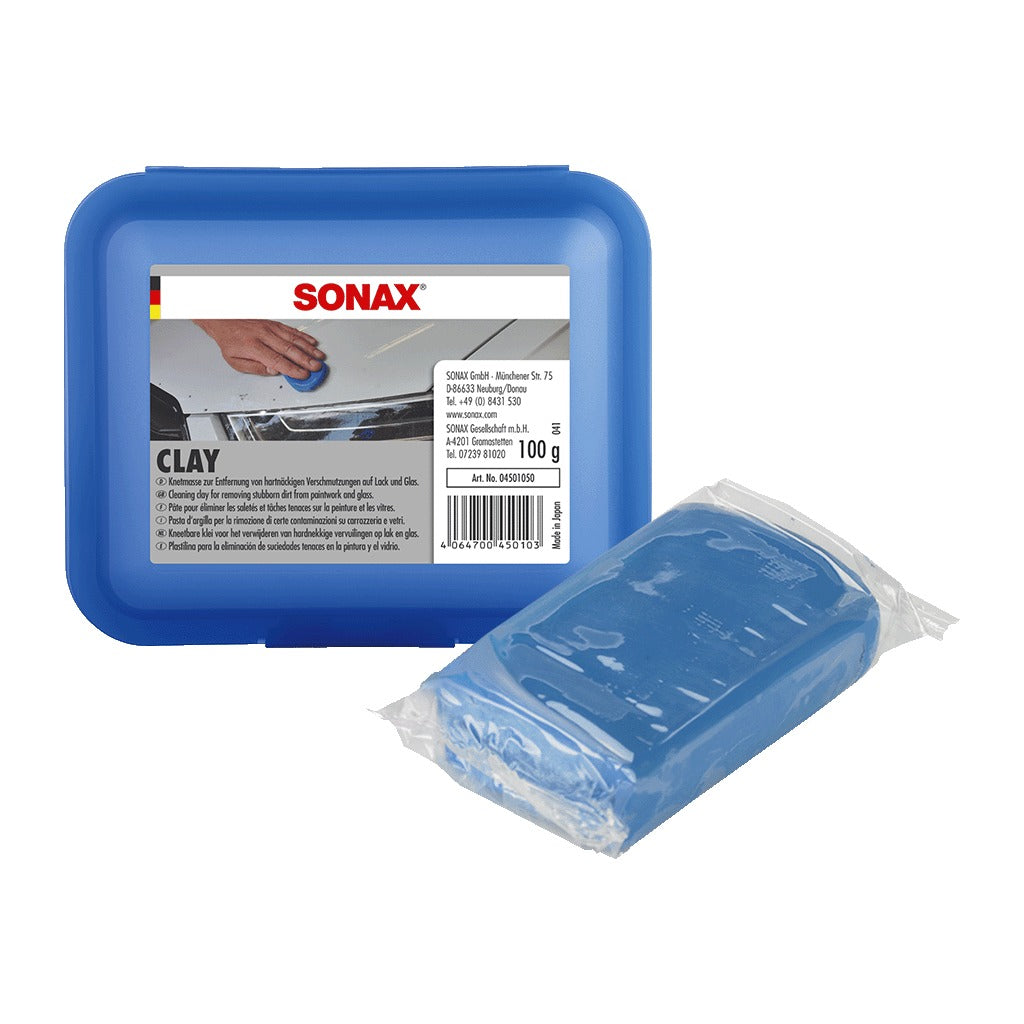
SONAX CLAY BAR is a super fine clay for paintwork decontamination that removes contaminants from the painted surface. It is made of fine rubber and synthetic resin, making it easy and convenient to use time & time again. For best results, use with a clay lube such as clear glass or gloss shampoo diluted in a 1:200 ratio.
What you're buying
- 100 g bar, blue clay, supplied in SONAX's blue hinged storage box — the box is the storage container, so keep it.
- SONAX article number 04501050. Made in Japan.
- SONAX also make a 200 g bar (04502050) in near-identical packaging — it is not distributed in Australia. This listing is the 100 g.
- Lubricant is required and is not included. Claying a dry or under-lubricated panel will marr it. Use SONAX Clear Glass, or Gloss Shampoo diluted 1:200.
- To apply, first wash your car, then knead the clay into a disc which fits in the palm of your hand; avoid dirt and debris and be careful not to drop it.
- Generously spray all surfaces with SONAX Clear Glass lubricant before rubbing the clay in straight motions on each section; kneading the clay for freshness before moving on to another section.
- When finished, dry the surface with a clean microfibre cloth and make sure to run your hand over it to check smoothness.
- Finally follow up with polish, wax or sealant as desired. For storage, simply mist the clay bar with Brilliant Shine Detailer and store in its original container or seal into a sandwich bag for an easy release after storage.
A note on technique: clay is mechanical, not chemical — it shears bonded contamination off the surface. Chemical decontamination first (an iron remover, then a tar remover) leaves the clay far less to do, which means fewer passes and less marring. Clay last, not first.
SONAX Clay Bar 100g | Paintwork Decontamination Clay | Made in Japan
Sale price$39.80