
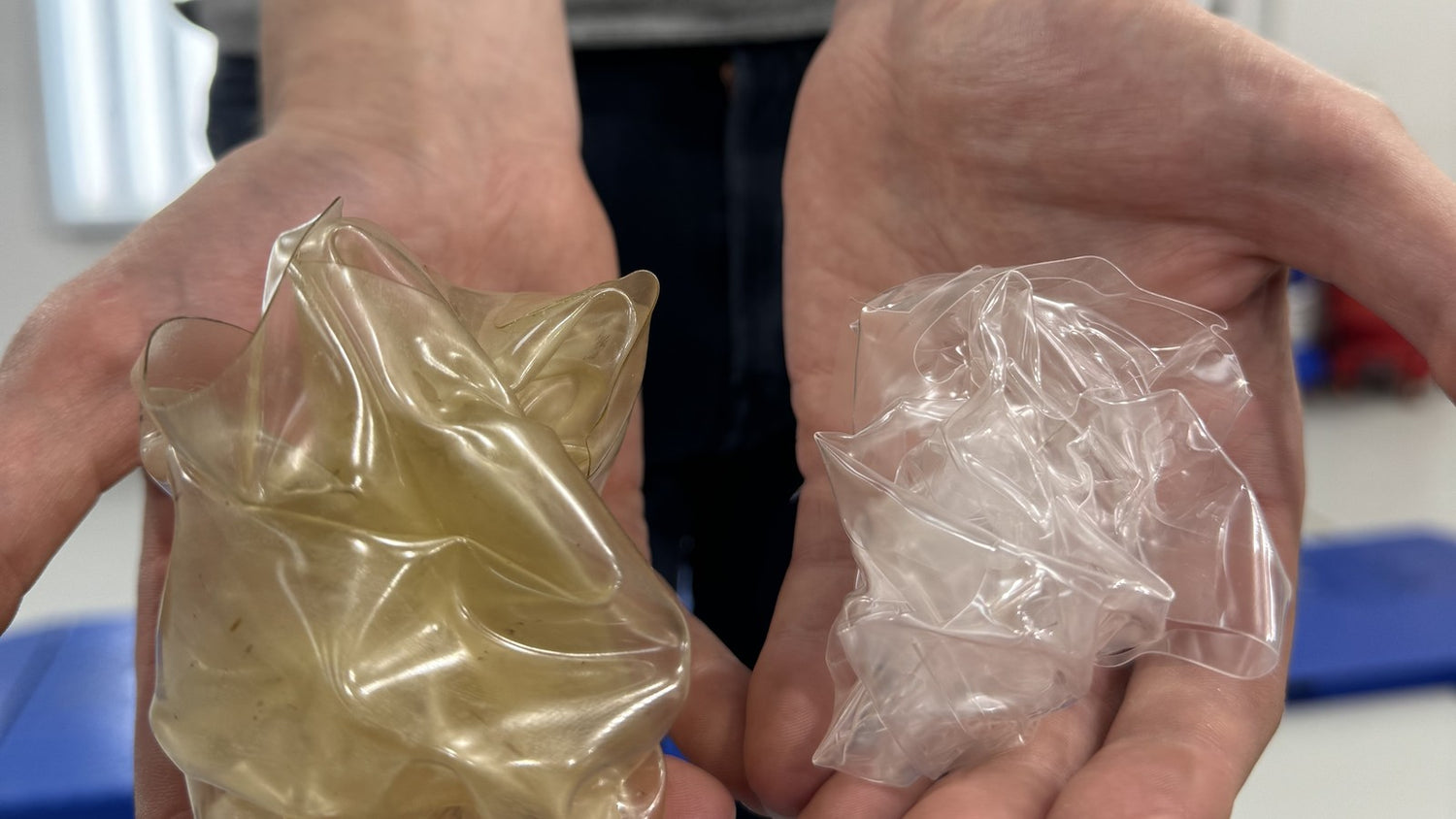
Two sheets of paint protection film. Both went on clear. Only one came off clear. The other turned the colour of weak tea — and the difference between them isn't age, or sunlight, or bad luck. It's chemistry, and it was decided the day the film was manufactured.
Paint protection film is one of the most controversial topics in the detailing industry, and for good reason. There are excellent films on the market and there are films that have no business going anywhere near a car — and from the outside, on install day, the two can look identical. So let's talk about what actually happens to a PPF as it ages, why some yellow and some stay clear, and what that ten-year warranty everyone quotes really covers. This is a subject where it pays to verify everything, so wherever a claim matters, I'll tell you exactly where it comes from.
Why PPF turns yellow: it isn't the sun, it's the ring
Every paint protection film is sold to you as "TPU" — thermoplastic polyurethane. That single word hides two completely different materials, and the gap between them is the whole story.
Aromatic TPU is the cheap one. It's built using aromatic isocyanates — MDI (methylene diphenyl diisocyanate) or TDI (toluene diisocyanate). Both carry a benzene ring in their structure. When ultraviolet light hits those rings, it drives a photo-oxidation reaction that rearranges them into new structures called chromophores — molecules that absorb visible light in the blue range. Absorb the blue, and what your eye sees reflected back is yellow. Worse still, this change happens in the polymer backbone itself, so it is permanent. No amount of polishing brings it back.
Aliphatic TPU is the premium one. It's built using aliphatic isocyanates — HDI (hexamethylene diisocyanate), IPDI, or H₁₂MDI. The defining feature is that there are no benzene rings in the isocyanate. There is simply nothing there for UV to rearrange into a chromophore, which is why a quality aliphatic film stays optically clear for its entire service life. This is fundamental polyurethane photochemistry, and it's the reason the whole premium PPF market is built on aliphatic film.
So when someone tells you a film is "TPU," that tells you almost nothing. The question that matters is which TPU — and most people never think to ask.
There are actually two yellows
Here's the part that makes diagnosis genuinely difficult, and the reason we're careful never to overpromise what a single photo can tell you. Yellowing doesn't only come from the film. It can come from the adhesive underneath.
The film is bonded to your paint with an acrylic pressure-sensitive adhesive. That adhesive layer can oxidise over time and discolour on its own, and because it sits beneath the film, that yellow bleeds upward through a top layer that might be perfectly healthy. So a yellowed PPF might mean a cheap aromatic film, or it might mean a failing adhesive under a decent film. From the outside — by eye, and certainly from the invoice — you often cannot tell which one you're looking at.
There's a third factor layered on top: the UV protection package. Good films are stabilised with UV absorbers and hindered amine light stabilisers (HALS). The absorbers are consumed as they do their job; the HALS work by regenerating, which is why they matter so much for the long haul. Budget films frequently cut this package back to save cost, and once the protection runs out, degradation accelerates. That's the chemistry behind why a cheap film doesn't just age faster — it falls off a cliff.
What a "ten year PPF warranty" actually covers
Almost every premium film is sold on a ten-year warranty, and installers quote that number constantly. It's worth understanding exactly what it is, because it's not what most people assume.
The major manufacturers word their warranties almost identically: the film is warranted to be free from manufacturing defects — specifically things like yellowing, cracking, bubbling and delamination — for ten years. Read that again. It is a limited warranty against manufacturing defect. It is not a statement that the film lasts ten years, it is not a service-life guarantee, and it says nothing at all about the one thing that matters most at the end: how the film behaves when it comes off.
Nothing in that document promises the adhesive will release cleanly. Nothing promises your clear coat stays on the car during removal. The warranty is a promise about the factory, not a promise about year nine on your driveway. That's not a criticism of the manufacturers — it's simply what the words say, and it's worth knowing before you lean on that number.
When to check your PPF: why we say start at five years
This next part is our recommendation, not a manufacturer instruction, and I want to be clear about that distinction. We tell clients to start having their film inspected around the five-year mark.
The reason is the adhesive. An acrylic pressure-sensitive adhesive doesn't stay static — its bond strength tends to build the longer it sits on the paint. At the same time, an ageing or lower-quality film can grow brittle. Put those two together and you get the failure mode we actually see in the studio: instead of peeling away in clean sheets, the film tears, and the hardened adhesive stays stuck to the paint. That's when a straightforward removal becomes an all-day ordeal.
The good news, and it matters for balance: sound factory paint almost always survives a proper removal without a mark. Where removals go wrong is on panels that have been resprayed or repaired, where aftermarket paint may not be as well bonded as the factory finish. That's a conversation worth having before the heat gun comes out, not after — which is exactly why a scheduled inspection beats waiting for a problem to announce itself.
How to choose a PPF installer before you sign
PPF isn't a consumable you replace casually. It's a semi-permanent decision that lives on your car for years, so the PPF installer you choose matters as much as the film itself. A few things put the odds firmly in your favour.
Go and see the room. Cleanliness affects the quality of any install, and a good studio is something you can assess with your own eyes before you ever hand over the keys. You're allowed to ask to see where the work happens.
Ask what film they're running — then research it yourself. Ask one simple question: is it aliphatic or aromatic? If they can't answer, that's your answer. And you don't have to take anyone's word for it — the manufacturer's own technical page will tell you what the film is made of.
Understand that cheapest rarely means best value. A cheap film saves you money exactly once, on install day. If it's an aromatic film, or it's carrying a stripped-back UV package, you pay that saving back later — in yellowing you can't polish out, and in a removal that can cost you time, adhesive headaches, and occasionally paint.
The film we install — and why it's aliphatic
At Alpha Details we install CarPro Immortal paint protection film. In CarPro's own words it's a clear-coated aliphatic polyurethane film built on an Ashland acrylic adhesive — which is to say it sits firmly on the right side of every distinction in this article. Aliphatic backbone, quality adhesive, engineered UV package.
We also video-log every install: the roll, the batch, and the work itself. That matters more than it might sound, because in this industry a film gets quoted and a different film sometimes gets installed — and you'd never know until it started yellowing in year six. A record means you know precisely what's on your car and precisely how it went on.
For many clients we pair the film with a coating on top — our hybrid PPF and ceramic coating package — for extra hydrophobics and easier maintenance. If a coating alone is more your speed, our ceramic coating service is built on the same chemistry-first approach. And whatever protection you run, the right PPF maintenance products keep a good film performing for its full life.
If your film is getting on in years, or you're weighing up an install and want a straight answer about what's going onto your paint, that's exactly the kind of thing we're happy to look at. You can book a PPF inspection or install at our Heidelberg West studio any time.
The one question that sorts good PPF from bad
Before you let anyone touch your car, ask them this: aliphatic or aromatic? Everything in this article comes down to that single distinction. Ask the question, verify the answer on the manufacturer's own site, and you've already sidestepped the most common — and most expensive — PPF mistake there is.

Leave a comment
This site is protected by hCaptcha and the hCaptcha Privacy Policy and Terms of Service apply.