
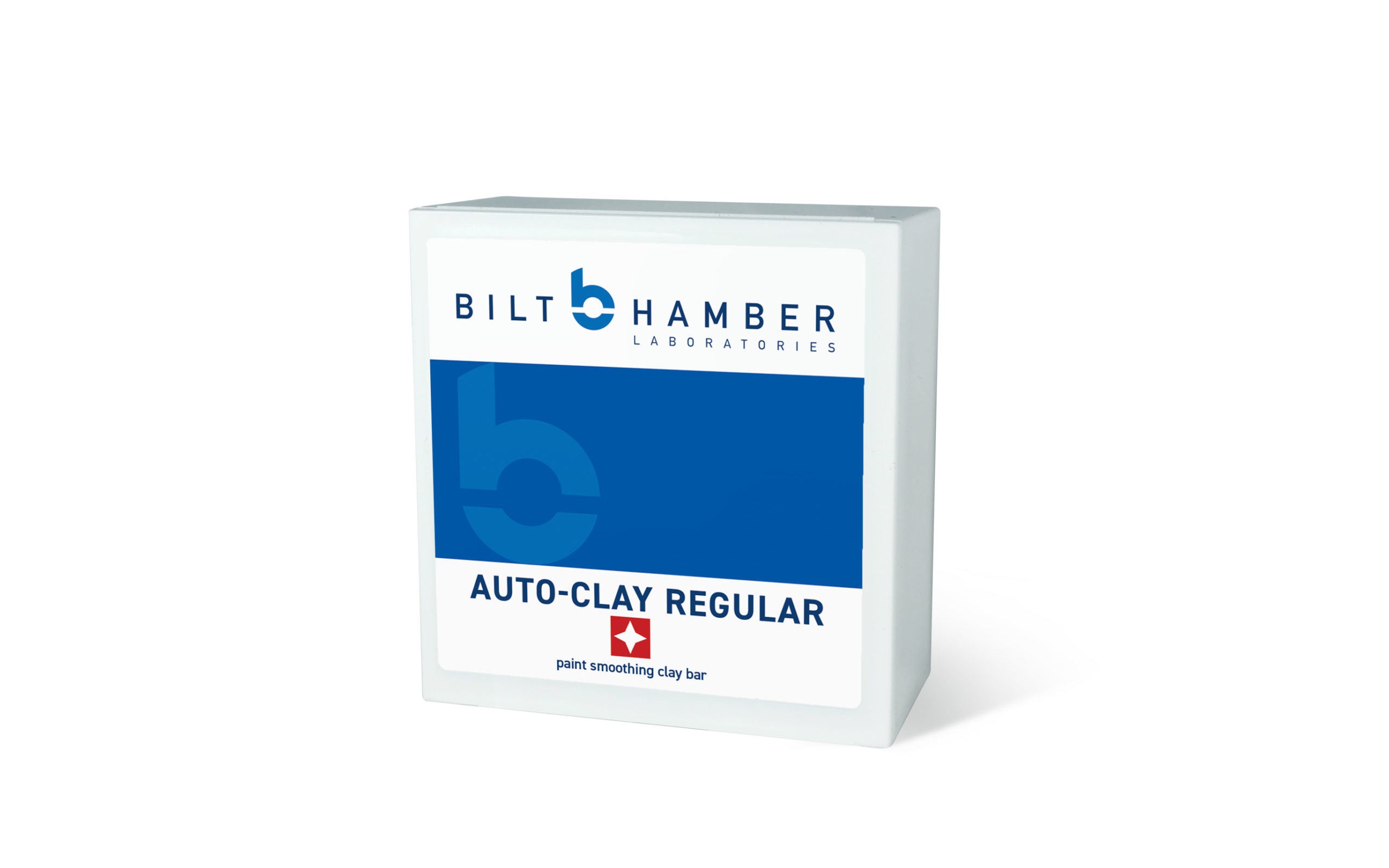
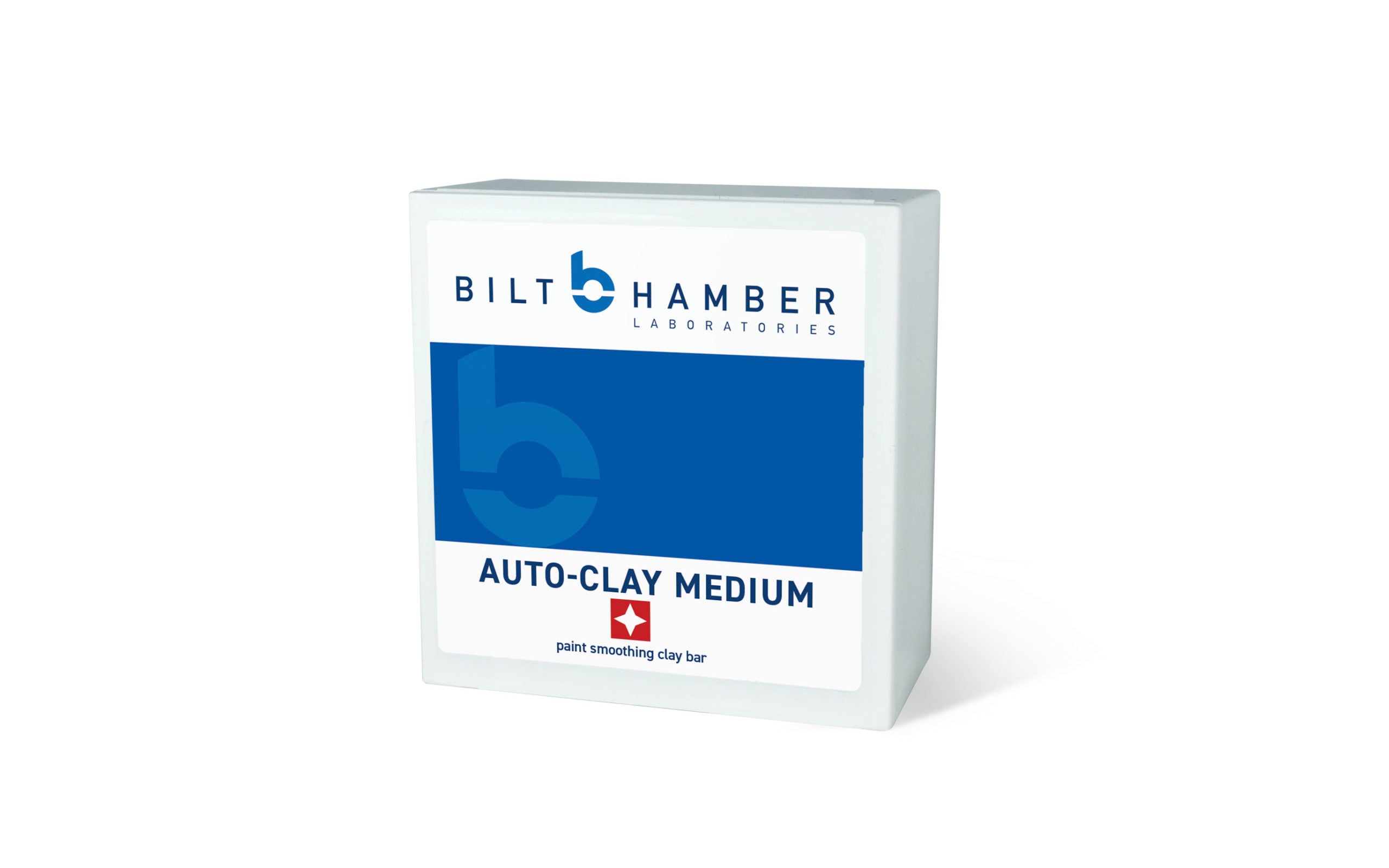
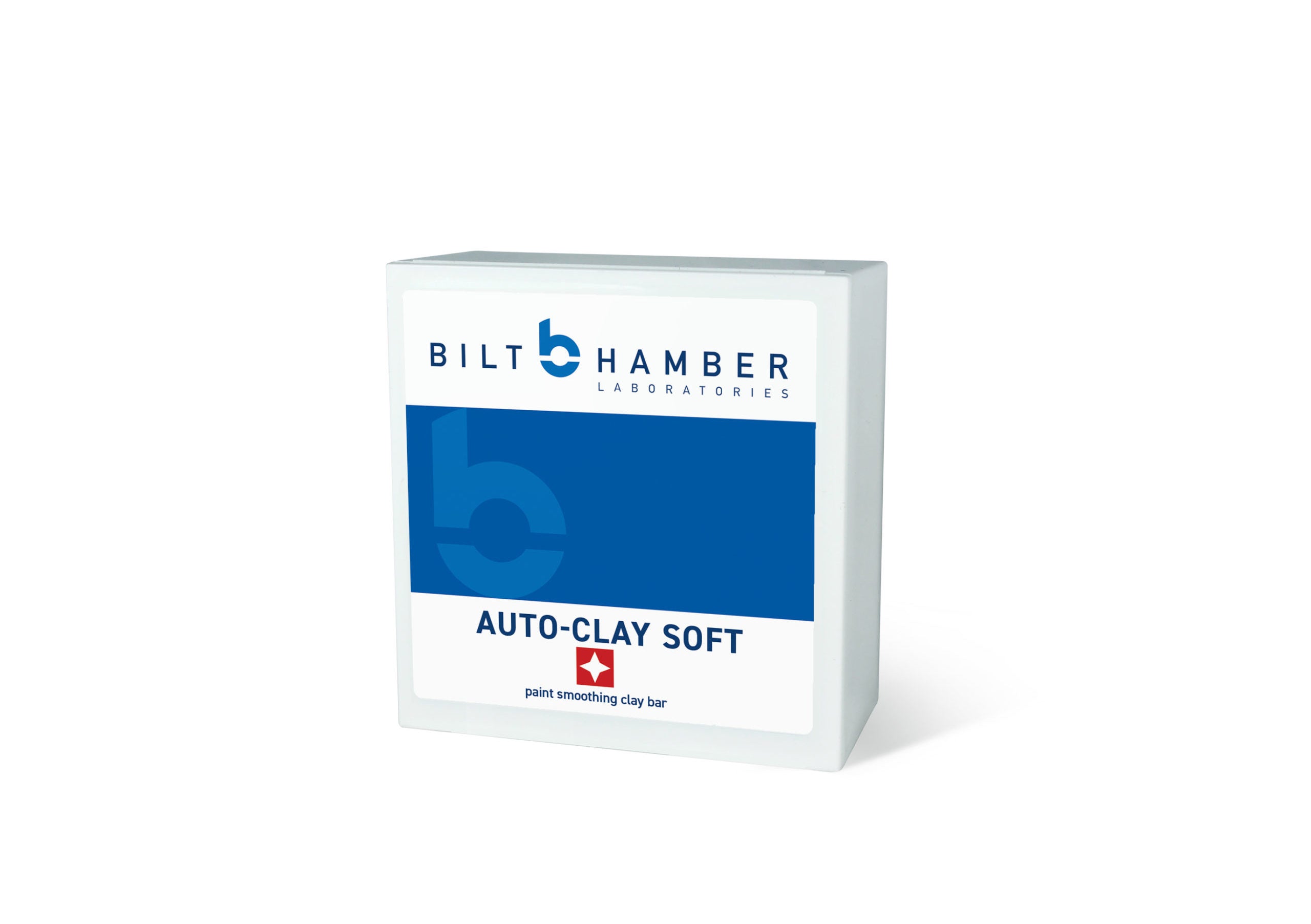
Bilt Hamber Auto-Clay | Water-Lubricated Clay Bar
The only clay bar that runs on tap water
This is the genuine point of difference and it gets buried under the usual clay-bar copy, so let's lead with it.
Bilt Hamber, verbatim: "Competing clays require the use of special lubricants. Bilt Hamber Laboratories auto-clay differs as its formulation enables normal tap water to provide the necessary lubrication. Some clay bars contain surfactants such as powdered detergents or soaps. Long-term use of surfactants can have adverse effects on paint systems — auto-clay contains no surfactants, detergents, soaps or other soluble materials."
Two things follow. First, you're not buying clay lube forever — a spray bottle of water does it. Second, and more to the point, you are not repeatedly dragging soluble surfactant across your clear coat every time you decontaminate.
Choosing a grade — it's not just aggression
This is where most guides get it wrong. Bilt Hamber's grading is a contamination × temperature decision, because all clay firms up when cold and softens when warm.
Regular. Heavily contaminated paint, or a car that has never been clayed. Also the right choice in hot weather, when a softer bar would go gummy.
Medium. Paint in reasonable condition. Folds easily to expose a fresh working face — the most forgiving all-rounder.
Soft. Paint in good condition, or if you clay frequently. Also the right choice in cold weather, when a firmer bar would be unworkable.
In an Australian summer, most people should be reaching for Regular — not because their paint is filthy, but because of the ambient temperature. That's counterintuitive and it's why we're spelling it out.
Use Korrosol first
Bilt Hamber recommend chemically decontaminating with Korrosol before you clay. It dissolves the embedded iron, which means the bar isn't dragging sharp ferrous particles across your paint — and your bar lasts considerably longer. Skipping this step is how people put marring into their own clear coat and blame the clay.
How to use it
Wash the car first. Work on cool, shaded paint. Mist tap water over 2–3 square feet, glide the bar back and forth under light pressure, keeping the surface wet at all times. When the noise stops, that section is done. Fold and knead to a fresh face as it loads up — reddish-brown residue on the bar means it's working.
Never use it dry. Never reuse it if you drop it. Expect around 4–5 cars from a bar. Wax or seal immediately afterwards — you've just stripped the paint bare.
Not classified as hazardous.
Safety Data Sheet (Australia)
Download the Bilt Hamber Auto-Clay SDS (PDF)